Insights
•
March 6, 2026
•
Greg Posner
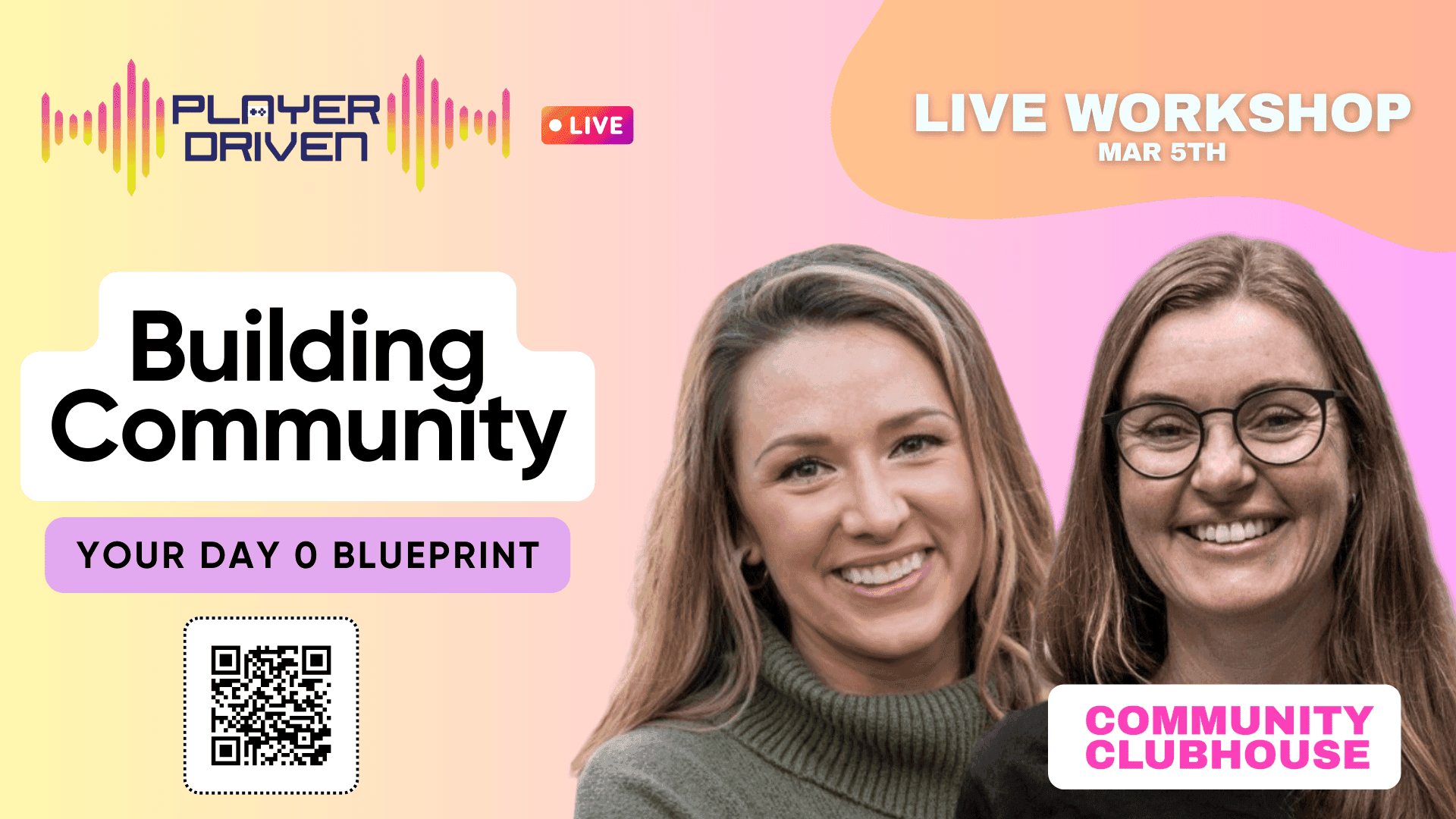
If you’ve been following the industry lately, you know we’re at a fascinating crossroads. We’re seeing record-breaking anticipation for massive titles, but we're also seeing that "safe" AAA bets aren't always guaranteed anymore. As we sit here in March 2026, just days away from GDC in San Francisco, the message is louder than ever: You can’t fix a broken community after it’s already built.
On our latest workshop, I sat down with two legends in the player loyalty and safety space: Karin Johnson, co-founder of Magic Potion Games (and a veteran of Club Penguin and Fortnite), and Hege Tokerud from Aiba. We went deep into why a "Day Zero" community strategy is no longer a marketing checklist item—it’s your primary competitive advantage.
Here are the high-level takeaways every studio needs to hear.
1. Community Design is Game Design
Back in the day, many studios focused strictly on mechanics first, letting the community form naturally—often in ways they didn't intend. Karin shared how Club Penguin flipped that script by building on a social foundation first.
In 2026, humans are more social than ever; our online personas are often as important as our real-world identities. If you aren’t designing your social systems—like how players interact in lobbies or express themselves through avatars—alongside your core gameplay, you’re missing the heart of why people stay.
2. Empower Players to be the "First Line of Defense"
We often think of moderation as "laying down the hammer," but the most successful communities actually police themselves. Karin pointed out a brilliant low-scope example: the Club Penguin Tour Guide program.
By passing a simple quiz on safety and kindness, players earned a hat and a sign. These "veteran" players then took it upon themselves to welcome newbies and call out bullying. When a peer tells you "we don't do that here," it's significantly more powerful than a generic system ban.
3. Safety is a Growth Engine (and Good for Business)
Hege brought some cold, hard facts to the table: Toxic games lose money. Research shows that "nice" games can see significantly more revenue because players stay longer and bring their friends.
Safety isn't a "mystical" concept; it's measurable. By tracking KPIs like report rates, session length, and flagged interactions, you can prove to your stakeholders that investing in community trust is actually an investment in your bottom line.
4. Don't Overbuild—Listen to the Lore
One of the biggest mistakes studios make is trying to launch a "perfect," over-polished product too early. Some of the best community moments come from "happy accidents".
Whether it was Fortnite accidentally enabling cross-play or Club Penguin fans inventing a "Blackout" theory based on a leaked whiteboard photo, the lesson is the same: Leave space for your players to tell the story. When players feel like their theories or ideas (like the legendary Ninja or Rainbow Puffles) influenced the game, they don't just play—they belong.
Final Thoughts
As we head into GDC, remember that while everyone else is talking about AI breakthroughs and engine tech, the real "make or break" for your game is the people playing it.
A huge thank you to Ed Hartman and the Community Clubhouse for driving these conversations. If you’re in San Francisco next week, make sure to check out the Clubhouse on Tuesday for even more tactical playbooks.
What’s your Day Zero plan? If you're looking for ways to scale your community safely without burning out your team, I'd love to point you toward the tools and strategies we discussed.
Share
Copy link