My wife asked me something during spring break that I haven't been able to shake.
We were in the middle of trying to figure out screen time with my son — he's about to turn 8, we've been navigating ADHD and the whole behavioral spiral that kicks in once screens start for the day. She looked at me and said: "You talk with trust and safety teams in gaming all the time. Does this ever come up?"
I didn't have a clean answer. But the more I thought about it, the more I realized — yeah, actually, it does. Whether you're trying to manage a kid on an iPad, millions of players in a live game, or a company like Epic making billion-dollar bets, you're dealing with the same core problem: systems, incentives, and what happens when those loops get really good at doing exactly what they were designed to do.
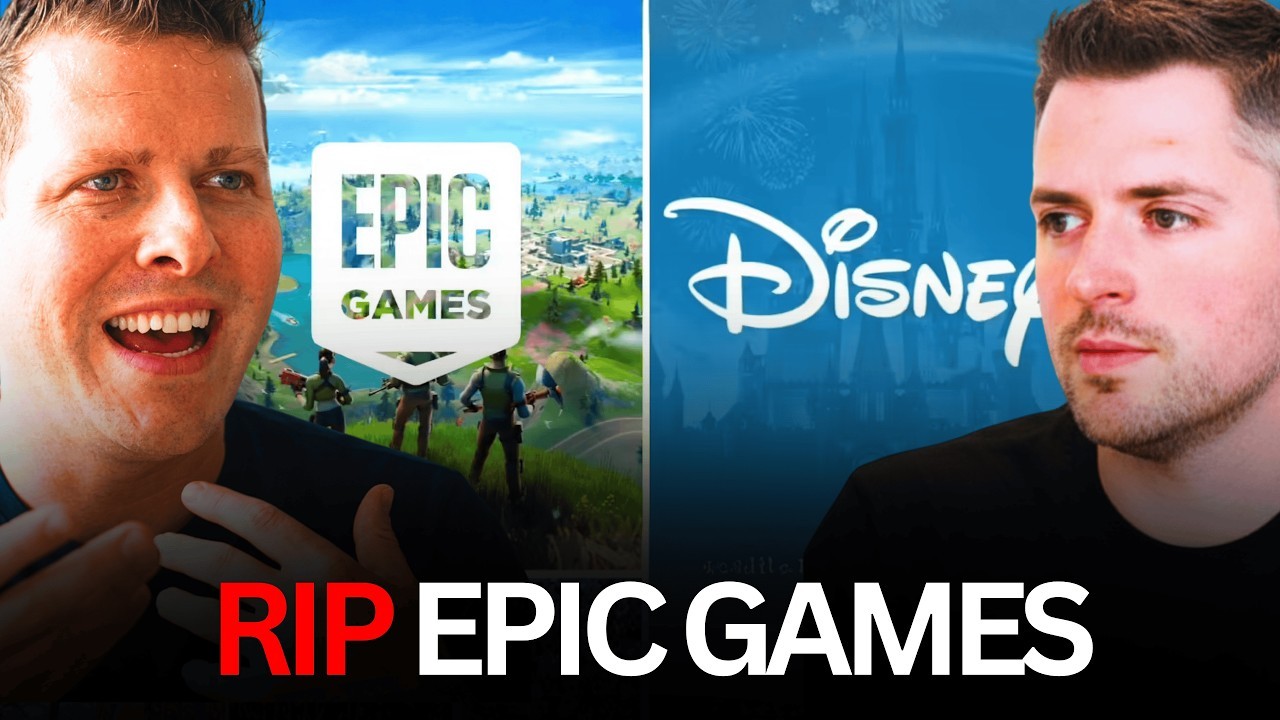
That's what Colin and I dug into on the latest Player Driven Live. The Epic-Disney acquisition chatter gave us the hook, but we ended up somewhere more interesting — what it means when systems that once worked perfectly start to work against you.
The Epic Situation Isn't About Bad Decisions. It's About Compounding.
Everyone wants to frame the Epic layoffs as a strategy failure. I don't think that's quite right.
Tim Sweeney made a choice at the peak of Fortnite's reach: go to war with Apple. And he knew what he was doing — they had a 1984-style knockoff ad ready to go the same day they triggered the terms of service violation. This wasn't a surprise. The outcome was expected.
But the consequences compounded in ways that are worth understanding:
1. Five years off the iOS App Store. iOS has a billion users — and probably the billion most financially valuable users in the world in terms of in-game spend. You can't just pause compound growth for five years and pick up where you left off. That's not how it works.
2. Roblox filled the vacuum. Correlation isn't causality, but the rise of Roblox and the Fortnite plateau are not unrelated events. COVID + no iOS Fortnite + a younger audience looking for somewhere to go = Roblox took real market share.
3. Apple's ATT changed mobile acquisition forever. When Fortnite came back to iOS, they stepped into a completely different user acquisition landscape. Probabilistic targeting is expensive. The playbook they'd built their audience on no longer existed in the same form.
So when people talk about Epic as a "falling knife," this is why. It's not that Fortnite is bad — it's that the system that built it is no longer operating under the same conditions it was designed for.
Two things can be true at the same time: what Tim Sweeney did for indie developers fighting Apple's stranglehold on distribution was genuinely good for the industry. And the people who paid for that fight were his own employees.
Why the Disney-Epic Acquisition Rumors Don't Hold Up
Let me be direct: I don't think Disney should buy Epic. Here's the breakdown.
Disney already has what it needs from this relationship. They put $1.5 billion into the deal. Star Wars, Marvel, and other IP are in-game. They're getting brand exposure with their characters inside one of the world's largest games. They're already executing that lever. What does ownership add to that?
Fortnite IP doesn't translate to Disney's core flywheel. The Disney model — the one Walt literally drew on a napkin — takes IP and expands it into parks, TV, merchandise, movies, and back again. Look at the Lego section at your local store. Fortnite sets are in the back corner. Pokemon and Star Wars are front and center. That core passion that makes IP expandable? I'm not sure Fortnite has it in the same way.
Disney is not a technology company. I just got back from Aulani. To sync my PhotoPass to my photos, I had to use the Disneyland app — not the Aulani app, not Disney+. There's a different app for every park. My TV didn't auto-recognize my Disney+ account when I walked in the room. These are not the systems of a company ready to absorb and operate Unreal Engine. Unreal is a monster — it powers some of the most sophisticated triple-A experiences in the world. Disney owning it would more likely cause it to atrophy than flourish.
The price doesn't work. We're probably talking $50 billion+. Disney's legendary acquisitions — Marvel for a few billion, Star Wars for $9 billion, Pixar — look like bargains now because the IP multiplied over decades. Epic is a declining asset at peak price. That math doesn't close.
If Disney genuinely wants a gaming acquisition, the IP-first logic my co-host Colin laid out points somewhere else. Blizzard has franchises that fit the flywheel — World of Warcraft, Overwatch, the fantasy/sci-fi IP range. World of Warcraft: The Land at Shanghai Disney would do massive numbers. The audience for Warcraft IP spans 20+ years of compounding fandom. That's the kind of harvest Disney actually knows how to execute.
Ubisoft is another conversation — discounted asset, recognizable IP, though the failed Assassin's Creed and Prince of Persia movies probably scare them away.
Three Out of Disney's Four Worst Acquisitions Were Gaming Companies
Worth sitting with this.
When Colin pulled up Disney's historically bad acquisitions, three of the four were gaming companies: Playdom ($563 million, failed social gaming), Club Penguin ($350 million), and Maker Studios (which famously owned almost none of the IP they were selling). The fourth was the Fox acquisition — expensive, and still debated.
The pattern matters. Gaming acquisitions fail for Disney when the math on the IP flywheel doesn't hold. Before writing a check, Disney needs to be able to whiteboard clearly: what does this IP become outside of games? What does it look like in a park? In a show? In merchandise?
If they can't answer that clearly, the acquisition isn't for them.
The System Is the Strategy
This is really where I want to land.
Whether you're managing a live game's player behavior, a trust and safety policy, a community's norms, or apparently trying to get your kid off Minecraft — you're working on a system design problem. Not a content problem. Not a features problem.
The Epic situation is a systems story. Epic built an incredible loop around Fortnite. That loop worked for years. Then the external conditions shifted — App Store access, ATT, Roblox, audience maturation — and the loop started running, it just wasn't running in the same environment it was built for.
We just wrapped our latest workshop with Community Clubhouse around Day Zero design and community building. The same theme came up there. You can't retrofit systems onto a community or a live game that's already in motion. The system is the strategy. You either design it intentionally at the start, or you spend years reacting to what it became.
That's worth carrying into whatever you're building.