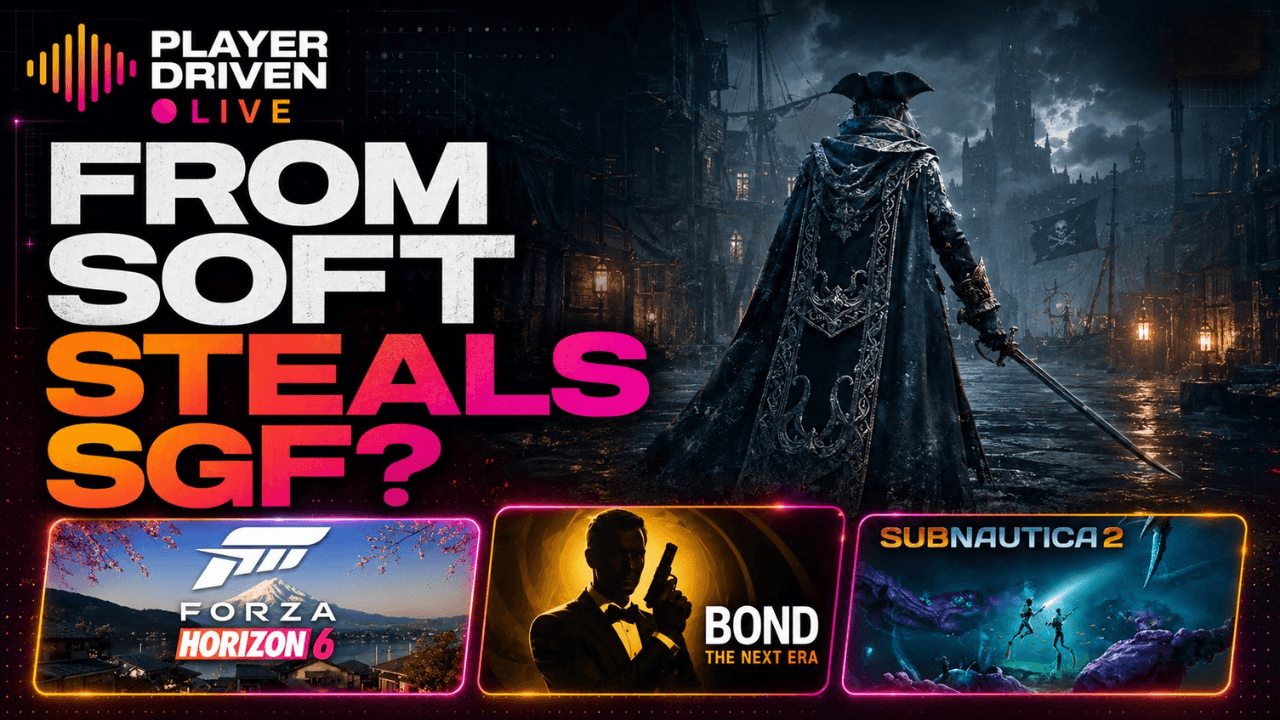
Forza Horizon 6 landed a 91 on Metacritic, pulled data showing unprecedented traction in Asian markets, and flew its influencer event to Japan to sell car culture instead of game features. Bond, releasing in the same window, bought an NBA halftime placement, put dev talent in turtlenecks for YouTube interviews, and assumed that 007 still carries weight with anyone under 35. One of these games will be a cultural moment. The other will be fine. That contrast, laid out across a full episode of Player Driven Live by Greg and analyst Colan, is the editorial spine of something practitioners running live games and planning launches need to hear: audience assumption is a budget leak.
What Playground Games Did That Bond's Team Didn't
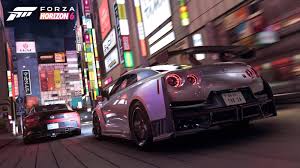
Forza Horizon 6 set its open-world racer in Japan. That choice was not cosmetic. Colan points to two things Playground got right that most studios miss. First, car culture is embedded in Japan in a way that makes the location a genuine audience expansion play, not just a visual change. Second, they took the marketing there too: the influencer activation was held in Japan, and it was built around street culture and car enthusiasts, not just gaming-adjacent creators.
"They went to the more micro communities of people that could be interested in a game like this and went to sell it to them, as opposed to just going to the core gaming community and saying come play this game."
The result: Forza was tracking significantly in Asian markets where previous entries in the franchise barely registered. Playground's YouTube channel ran real cars on real Japanese roads. The content sold the culture of driving, with Forza as the vehicle, not the pitch.
Bond's campaign, by contrast, treated the IP as self-explanatory. Dev interview content with limited viewership, a Coca-Cola integration, and an NBA buy. Colan estimates IO Interactive will move somewhere in the 2 to 3 million unit range, which is not a disaster but is well below what Hitman 3 achieved, and well below what a blank-canvas reboot of a major franchise should theoretically reach. The game has at least one genuinely interesting mechanic, a social-engineering system where Bond can talk his way out of being caught, but that detail barely surfaced in the pre-launch noise.
The Difference Between Streamers and Communities
This is where the practitioner layer of the conversation sharpens. Colan draws a distinction that gets blurred constantly in marketing planning: streamers are personalities, not communities. Sometimes they lead a community. Often they are just one node in one.
"Streamers are personalities. Sometimes they're the figureheads of communities. Sometimes they're just a piece of a community. But ultimately they're not community in themselves."
For a game like Bond, the relevant communities are not the top-tier influencer roster. They are Discord servers of Uncharted fans who have been underserved since Naughty Dog stepped back from the franchise. They are action-adventure players. Treasure-hunting game enthusiasts. The people who would buy the game if they knew it existed and why it was made for them.
Crimson Desert is the counter-example both hosts hold up. Pearl Abyss put Will Powers essentially everywhere on the internet in real time, responding to player questions, iterating in near-real-time on critiques, and leaning into the Black Desert Online community as a launch base. The game reportedly crossed 5 million copies sold. The community-first approach, combined with genuine responsiveness at launch, turned a review-score controversy into a story about a developer listening to players.
The Mixtape Problem: When Your Core Audience Lives Somewhere Else
Mixtape entered the same conversation as a different kind of case study. The game has a music-based identity, a nostalgic nineties and aughts framework, and something like 2,000 concurrent players at peak. Dead as Disco, a small self-published early access title that took its concept to TikTok first and built from audience signal, moved hundreds of thousands of units with a fraction of the marketing infrastructure.
Colan's diagnosis: Mixtape marketed to the gaming press and the gaming influencer class. It did not go where its actual audience lives. For a game whose DNA is music, TikTok is an obvious distribution channel. Original recorded tracks could have been in-feed content. Nostalgia-era community spaces were available. Greg Greg floated a simpler distribution alternative: a game like Mixtape probably belongs on Netflix's gaming layer, where the discovery mechanism does some of the heavy lifting.
"If your game is DNA'd with music, then TikTok is where the fish are. It hands down. Go where the fish are."
The pattern across Bond, Mixtape, and the counterexamples is identical. Studios that presume their IP or concept will pull audiences to a standard gaming distribution path are leaving ceiling on the table. Studios that identify where specific micro-communities already exist, then go build presence there before asking for anything, tend to outperform their genre peers on equivalent budgets.
Summer Game Fest: Calling Shots on the Rumor Mill
The back half of the episode shifts to Summer Game Fest speculation, with both hosts assigning rough probabilities to a set of circulating rumors. The signal plays: FromSoftware's rumored pirate game (codenamed Cerulean Onslaught) would, if real and shown with hands-on time, likely win the show outright. A GTA 6 preorder reportedly surfaced via a Best Buy leak set for May 18, and Colan argues that Rockstar at Summer Game Fest would function less as a participant and more as a gravitational anchor that reshapes everything around it. A full Ocarina of Time remake tied to the upcoming Zelda film is assessed as more probable than not, with Nintendo's stated commitment to doubling down on software for Switch 2 providing strategic logic for a fall window release.
Halo gets discussed and largely dismissed as needing significant rebuild work before it can generate genuine hype again, though Greg floats a shadow-drop scenario as the only version of the announcement that would actually land.
The thread connecting the Summer Game Fest segment back to the earlier marketing conversation is implicit but worth naming: the games most likely to win the show are the ones with built communities who have been waiting for them. Elden Ring's successor. A Zelda remake tied to a film. GTA 6, which already commands as much attention share as Forza does the week of Forza's launch, despite being six-plus months out. None of those wins are about where you buy your media placements.
The question worth sitting with: if your current launch plan assumes the name on the box will do the audience-building work, which micro-communities are you not talking to yet, and where do they actually spend their time?