Three AAA titles. Eight days. One window that nobody planned for.
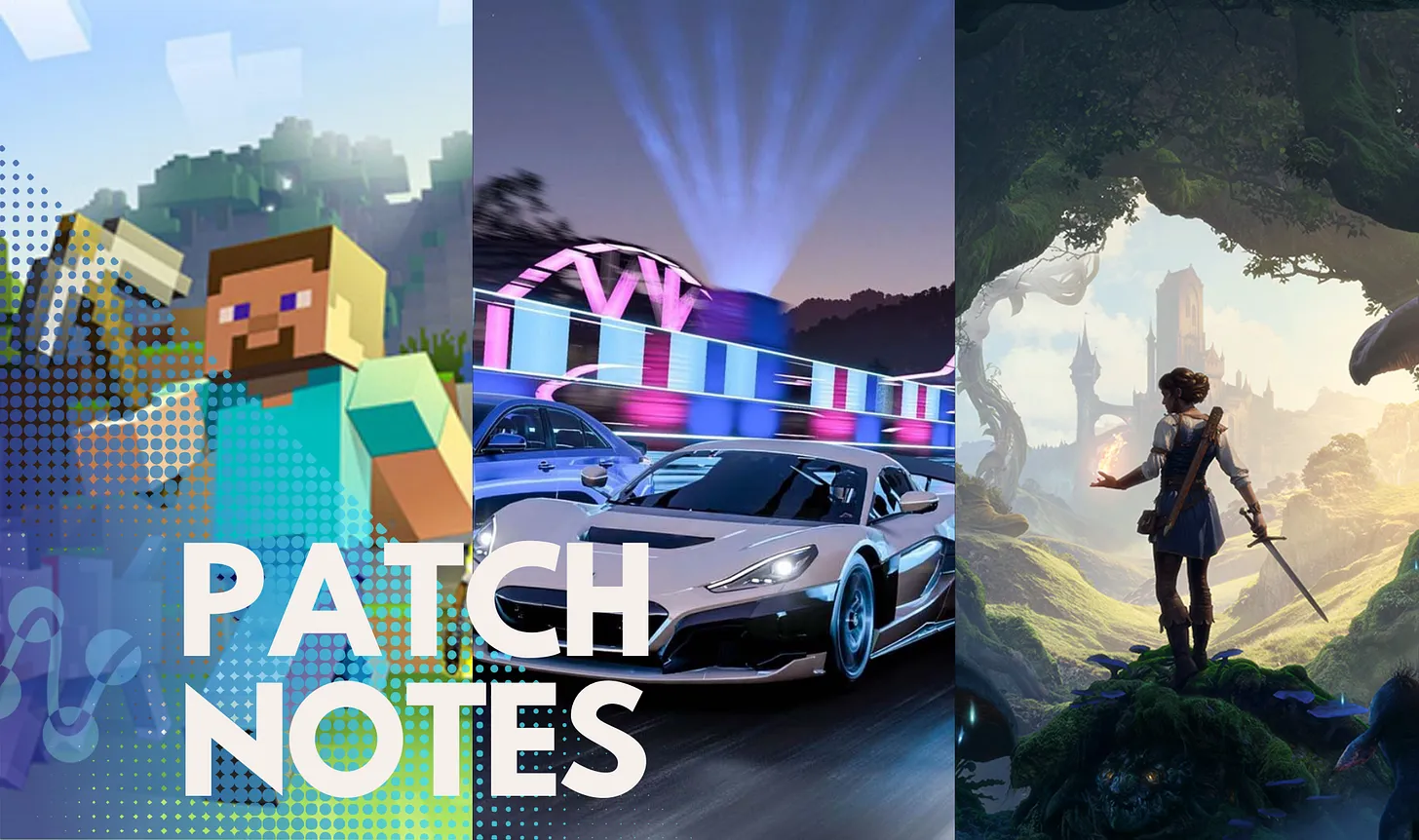
In May 2026, gaming studios face one of the most compressed launch windows in recent memory: Forza Horizon 6 (May 19), Lego Batman: Legacy of the Dark Knight (May 22), and James Bond 007: First Light (May 27). On this week's episode of Player Driven Live, we dug into what the demand share data actually says about how each game is tracking — and what it tells us about one of the most underrated decisions in game development: when you launch.
How We Got Here: The GTA Six Effect
None of this was supposed to happen. May was GTA Six's window. Had Rockstar held that slot, it's likely all three of these titles would have moved. When GTA slipped, a land grab followed — and the consequences are playing out in real time.
Lego Batman moved in first. At Gamescom last year, it was generating serious buzz, tracking close to where Lego Star Wars: The Skywalker Saga was at the same point pre-launch. That was a COVID-era title that sold to an audience stuck at home with nowhere to go — a meaningful benchmark. Then Forza Horizon 6 planted its flag. Then Bond shifted its release date from March to May to fill the gap left by GTA.
The result: three games competing for the same attention window in the same eight days.
The Data: Who's Actually Winning
Forza Horizon 6: The Clear Winner
Forza Horizon 6 is the story of May 2026. It's trailing Forza Horizon 5 by roughly 15 basis points in pre-launch tracking — which sounds like underperformance until you remember that Horizon 5 launched during COVID in 2021, when every title was inflated by stay-at-home demand. Adjusted for that reality, Horizon 6 is essentially matching its predecessor heading into launch.
The game is also set in Japan this time, adding novelty to an already dominant franchise. And Microsoft has confirmed it will come to PlayStation 5, expanding its total addressable audience significantly beyond the Xbox and PC base that Horizon 5 captured.
The deeper point: racing games are systematically underestimated by the gaming press while being systematically overplayed by actual players. Mario Kart 8 Deluxe sold 76 million copies on Switch — roughly double the lifetime sales of Mario Odyssey, a game that received far more critical attention. Forza Horizon 5 hit 40 million players between Game Pass and direct sales and was largely treated as a niche title. Horizon 6 will almost certainly be the dominant game of Q2 2026 by player count. Few will write about it like it is.
The lesson: revealed preference beats stated preference every time.
Bond: First Light — A Victim of the Calendar, Not the Game
007: First Light is a different and more instructive story. When the game's release date was March, it was positioned to dominate a quieter window. Demand share data tracked it as a strong performer — an action-adventure title trending at the upper range of comparable games released since 2023, roughly in line with where Jedi: Survivor was at the same pre-launch stage.
Then it moved to May 27. Into Forza's window.
Since then, its cumulative demand share score — a metric that reflects audience attention and search behavior in the weeks leading up to launch — has declined measurably. Not because anything changed about the game. Because Forza is now eating its attention share, and players have a finite amount of both money and time.
Bond is still likely to finish second in this three-game race. The game itself looks good — a single-player action title that fills a gap the market hasn't served well since the Uncharted series went quiet. The IP is uniquely flexible: Bond has recast and reinvented itself across generations in a way that Indiana Jones never figured out, and that makes video game Bond genuinely interesting territory. If the story is strong, it will find its audience.
But the launch week numbers will reflect the calendar, not the quality.
The lesson: a good game in the wrong window is a preventable problem.
Lego Batman: Legacy of the Dark Knight — The Ownership Problem
Lego Batman is the most complicated case. The game is genuinely promising — TT Games makes excellent family-friendly titles, and this one is a love letter to Batman across every era: Christian Bale, Michael Keaton, Robert Pattinson, Ben Affleck, each with their own Batmobile. The original Lego Batman game from 2008 is still the best-selling superhero video game ever made, with 13.6 million copies sold. There is real nostalgia here, and real appetite.
But Lego Batman's pre-launch tracking has fallen to roughly 40% of where Lego Star Wars: The Skywalker Saga was at the same point. And the reason isn't the game — it's the ownership structure sitting above it.
Warner Bros. Gaming has passed through Time Warner, AT&T, Discovery, and is now headed toward Paramount in a series of corporate transactions that have left TT Games underfunded, underpromoted, and producing a fraction of the output they managed in their peak years. The Lego toy line tied to this game — four distinct Batmobiles, a strong retail hook — exists in stores with almost no marketing behind it. The synergy that should exist between the toys and the game isn't being activated.
The studio isn't failing because of bad work. It's failing because nobody in the ownership chain has made gaming a priority.
Our take: the Lego Group should simply buy TT Games from Warner Bros. outright. They have the capital. TT is the studio responsible for some of Lego's most valuable cultural moments. Bringing them in-house, with direct access to the Star Wars, Batman, and Harry Potter licenses through the existing Lego agreements, would stabilize the studio and reestablish a consistent pipeline of quality Lego games that the market clearly wants.
The lesson: great games need organizational stability, not just creative talent.
What Good Release Window Strategy Actually Looks Like
The Bond situation makes the tradeoffs concrete. The game had a clean March window — fewer major titles, a month that has historically rewarded single-player story games. It moved to May and walked into the largest open-world racing franchise in the industry.
The alternative paths were real: hold March, or move to June, where currently nothing major is scheduled. Either option would have given the game room to breathe.
This is not hindsight analysis. These windows are visible months in advance for anyone tracking demand share and competitive release calendars. The question isn't whether studios should be doing this analysis — it's whether they're doing it early enough and weighing it against internal pressures to ship.
A few principles that hold up across launch cycles:
Attention is zero-sum. Players have finite budgets and finite time. A game launching into a crowded window isn't just competing for day-one sales — it's competing for review coverage, streamer attention, social media conversation, and word-of-mouth momentum. All of those compound or decay in the first two weeks.
The window shapes the narrative. A game that underperforms in a crowded window gets labeled a disappointment regardless of quality. That label is hard to shake even when the long-tail numbers eventually recover. Jedi: Survivor had a rough launch window and never fully escaped the "underperformed" narrative despite solid lifetime numbers.
Platform distribution amplifies or limits the damage. Bond launching on PC, PlayStation, and Xbox gives it room to find players over time. Lego Batman's apparent Switch 2 exclusivity caps its total addressable market at whatever the Switch 2 install base is by May — currently estimated around 19-20 million units worldwide. That's a meaningful constraint for a game that would naturally sell well on the larger Switch install base.
Post-launch marketing can recapture momentum — but it costs more than getting the window right. A game that launches well carries its own momentum through word of mouth. A game that launches into noise requires sustained marketing investment to find its footing, which not every publisher has the appetite or budget for.
Nintendo's Quiet Strategy: Serving Two Audiences at Once
One subplot worth noting from this week's discussion: Nintendo appears to be running a deliberate two-platform strategy that most people haven't fully articulated yet.
Pokémon: Pokopia is a Switch 2 exclusive. Tomodachi Life: Living the Dream is a Switch exclusive. Both are cozy simulation games. Both are launching within a few months of each other. That's not a coincidence — it's a way of continuing to monetize the 150+ million unit Switch install base while also creating incentive to upgrade to Switch 2.
Nintendo's core business is software, not hardware. Abandoning the Switch install base entirely would mean lighting 150 million potential software customers on fire. The two-platform approach lets them migrate players gradually while keeping the existing base engaged — essentially the same logic that kept PlayStation 2 software releasing well into the PS3 era.
With Xbox reportedly planning hardware north of $1,000 for its next generation and PlayStation raising prices, Nintendo's position as the affordable, portable option looks increasingly strategic rather than incidental.
The Bigger Picture for Gaming Operations
Release window strategy sits at the intersection of game development, marketing, live ops planning, and player support resourcing — which is why it matters to everyone in gaming ops, not just studio leadership.
A crowded launch window means compressed player support queues. It means community management teams competing for share of voice. It means live ops teams making decisions about event timing and content drops with less organic player momentum behind them.
Getting the launch window right is one of the few decisions that makes every downstream job easier.
We'll be watching how all three of these titles perform through the end of May. Our prediction: Forza dominates, Bond finds its audience in the weeks after launch if the reviews are strong, and Lego Batman surprises on the upside if the summer word-of-mouth from kids and families has room to build.
This post is adapted from a discussion on Player Driven Live, our weekly livestream covering the gaming industry from the perspective of the people who keep games running. Watch the full episode [here] and join the conversation in our Discord.
Player Driven is a community and content platform for gaming professionals working in player support, community management, live ops, trust & safety, and adjacent roles.