Game developers are used to building in uncertainty. You launch into changing player expectations, shifting platform rules, unpredictable communities, monetization pressure, global regulation, and the occasional bug that somehow only happens when a streamer with 400,000 followers is live. Now add generative AI to the pile.
AI is already in the workflow. Concept art, dialogue drafts, marketing assets, idea testing, placeholder textures, dynamic NPCs. Some studios are treating it like rocket fuel. Others are treating it like someone handed them a legal grenade and said don't worry, it probably won't go off.
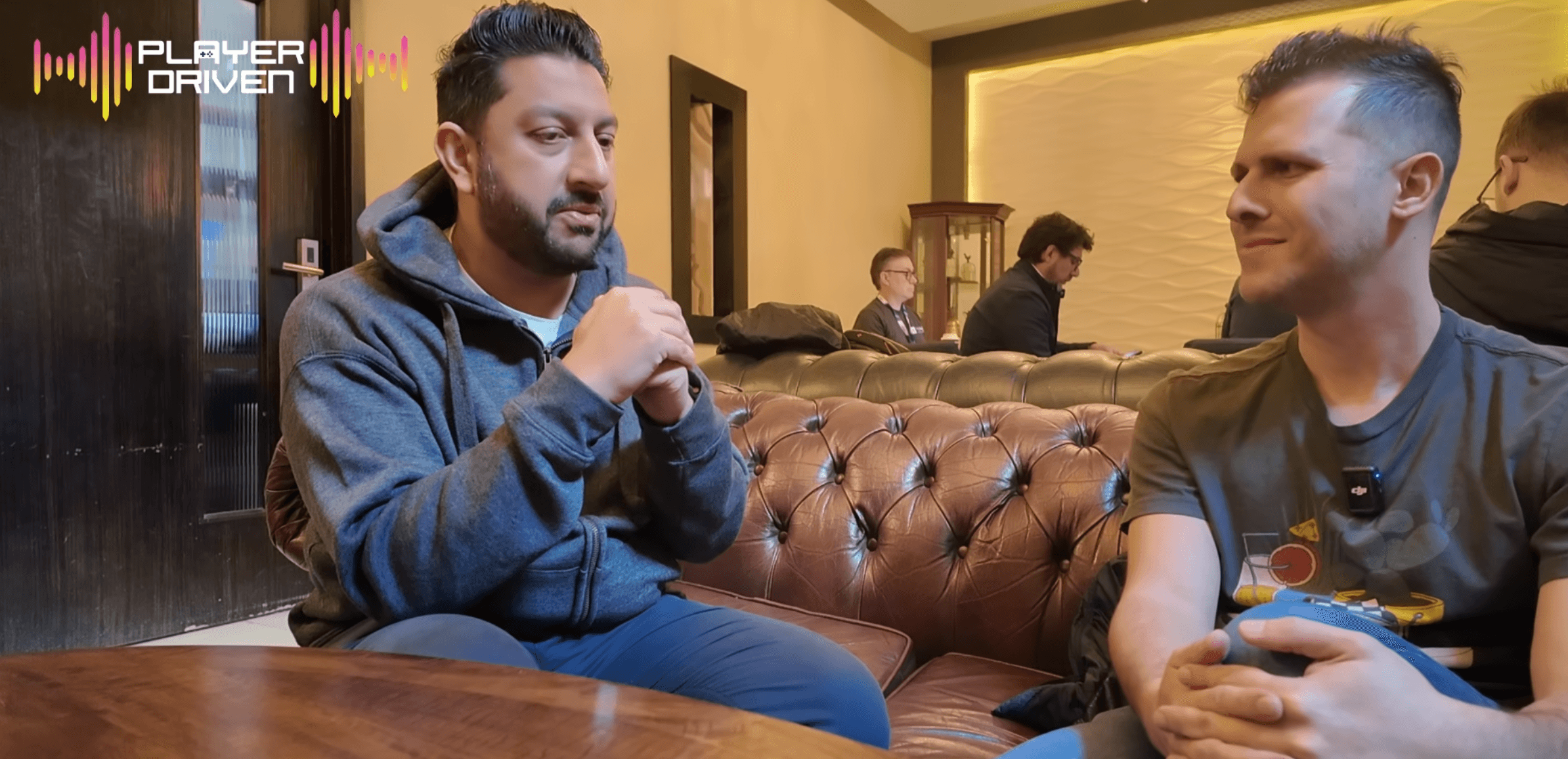
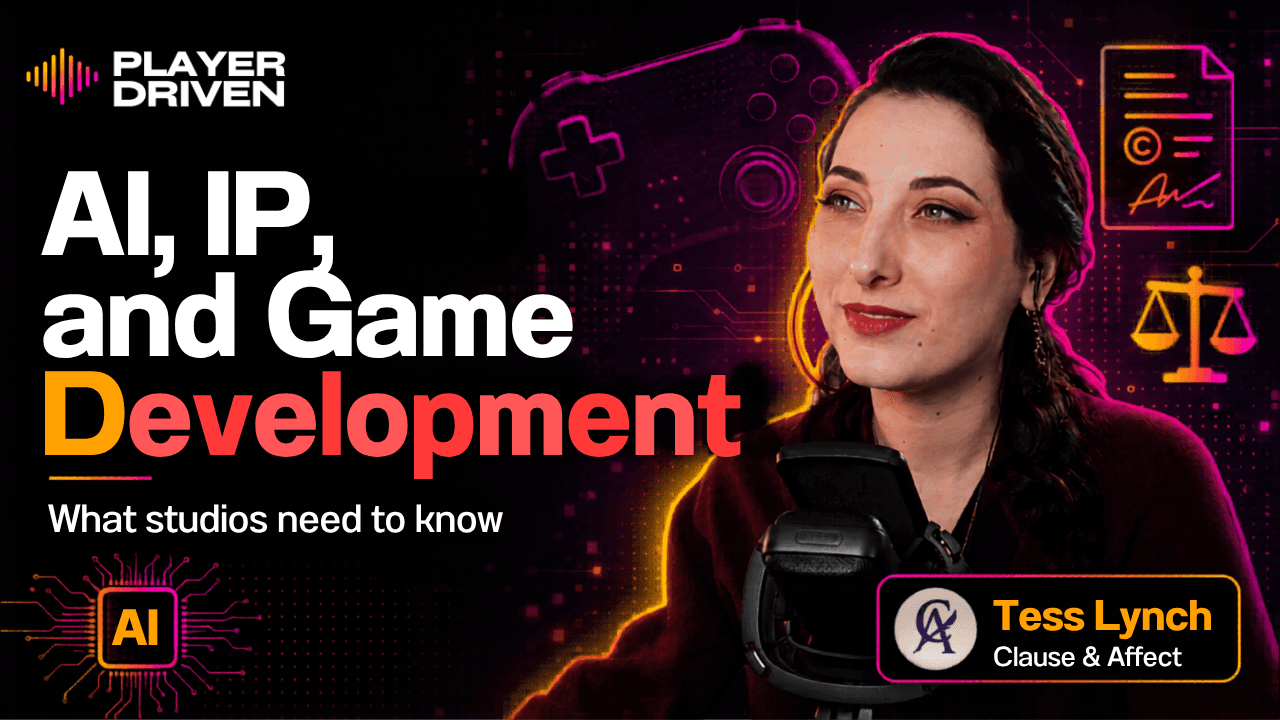
On a recent Player Driven episode I sat down with Tess Lynch, founding attorney at Clause and Effect, about the messy middle where games, AI, IP, privacy, and creator rights all run into each other.
The takeaway wasn't "AI is bad." It also wasn't "AI is the future." It was something more useful than either of those.
Studios need to know what kind of AI they're using, where the output came from, who owns it, whether a human actually contributed to it, and whether that use creates risk for players, creators, contractors, or the business.
That sounds obvious. It isn't.
"No AI" is doing more work than people think
A lot of studios are now putting out public statements that they don't use AI. On the surface, that's clean. Players get it. Artists appreciate it. Marketing has a nice trust signal to point at.
The problem is that "AI" means different things depending on who's saying it.
Tess made this point and it stuck with me. Games have been using automated and AI-adjacent systems for years. Procedural generation, ray tracing, smart selection tools, upscaling, machine learning. None of those carry the same creative or legal weight as a generative tool spitting out images, voices, music, writing, or NPC dialogue.
A procedural system building a level layout isn't the same thing as a generative model producing a character portrait trained on scraped artist portfolios. A Photoshop selection tool isn't the same thing as a model generating a voice performance that sounds a lot like a real actor. A licensed ML tool isn't the same thing as an open model trained on data nobody can fully account for.
When a studio says "we don't use AI," what they usually mean is closer to "we don't use generative AI to replace human creative work." That's a much more useful policy because it gives the team a line they can actually operate against.
The legal question isn't always "was AI used"
One of the more practical things Tess said is that the legal question often isn't whether something is or isn't AI. The better questions are where the training data came from, whether there was consent, whether there's human authorship in the final output, and whether the use harmed someone.
That reframing matters because AI risk in games rarely shows up as one giant obvious problem. It sneaks in through workflows.
A contractor uses AI-generated images for concept work. A community manager generates a promo graphic. A narrative designer drafts quest dialogue with an AI assist. A marketing team generates a trailer background. A developer drops in an AI texture as a placeholder and forgets to swap it before launch.
And now the studio is answering questions nobody bothered to document at the time. Was it created by a human? Was it built on protected work? Can the studio actually claim ownership? Was the contractor even allowed to use that tool? Did the contract require disclosure? Does the public AI policy line up with what actually happened internally?
This is where teams get exposed. Not because they were doing anything shady, but because the tools entered the workflow before anybody built a process around them.
The copyright problem nobody wants to talk about
The part of the conversation that I think every developer should sit with is the copyright piece.
In the U.S., work created entirely by AI, with no meaningful human authorship, may not be eligible for copyright protection. Which means if a studio builds major creative assets entirely through AI, they may not have the legal ability to stop anyone else from copying those assets.
That doesn't mean AI can't be part of the creative process. Tess was clear that human involvement still matters. AI as a reference, an early concept, a rough draft, or a component that a human meaningfully transforms can still leave the human-authored parts protectable. But if the final creative expression is just generated by a model and dropped into the product, the ground gets a lot shakier.
The practical question for game teams is whether you're using AI to assist the creative process or to create the final protectable work.
An indie team using AI to brainstorm UI concepts is in a different position than a studio shipping AI-generated character art as final key art. A designer using AI to rough out NPC dialogue is in a different position than a studio shipping fully AI-generated voice performances. A team using AI for placeholder textures is in a different position than a team shipping those same textures and claiming ownership.
The business risk goes up the moment AI output becomes part of the actual commercial product.
Contractors make this worse
Game development already runs on freelancers, vendors, outsourcing partners, modders, community creators, and small production teams. AI adds another layer of "wait, who made this and how."
If you hire a contractor for art, music, writing, or VO, you need to know whether they're using generative AI. You also need to decide whether that's allowed, restricted, or off limits entirely.
Tess pointed out that studios taking a hard "no AI" position can just put that directly into the contractor agreement. It might raise the cost because you're paying for human authorship, but it gives the business a clear chain of ownership when something goes sideways.
For small studios this matters more, not less. A two-person indie team isn't running a procurement process. They still need the basics. Contractor agreements should say whether generative AI is allowed, whether it has to be disclosed, who owns the work, and what happens if a delivered asset creates legal exposure six months later.
This is not glamorous work. It's also a lot easier to handle before launch than after a community member finds an asset that looks suspiciously familiar.
Privacy and likeness are now game development problems
This conversation isn't only about copyright. It's also about privacy, likeness, and identity.
Tess brought up deepfakes, misinformation, and the use of someone's name, image, likeness, or voice without consent. That's a game industry problem now because studios are working with real creators, streamers, voice actors, community members, UGC platforms, AI NPCs, and creator-driven marketing pipelines.
If a game uses dynamic AI characters, voice cloning, player-generated content, or creator marketing, the question isn't "can we make this." The question is whether you have the rights and consent to use it safely.
And the legal landscape is getting messier, not cleaner. Tess described a patchwork of state-level laws on privacy, AI, and age assurance that creates a fragmented compliance environment for studios. Games are global by default. Even small games end up reaching players across states, countries, and regulatory regimes you didn't plan for. Privacy, data governance, age assurance, moderation, AI disclosure — none of these are big-company-only problems anymore.
They're live service problems. Community problems. Indie problems the second the game finds an audience.
Fun how success creates paperwork. Truly the final boss nobody puts in the launch trailer.
What to actually do
Studios don't need to panic. They do need to be more intentional.
Start by defining what "AI use" actually means inside your studio. Separate procedural systems, licensed ML tools, internal productivity tools, generative creative tools, and player-facing AI features. If you treat all of those as one bucket, you can't write a policy that means anything.
Then decide where the line sits. Some teams will prohibit generative AI in final creative assets. Some will allow it for ideation only. Some will allow it when the tools are trained on licensed datasets. Others will lean into AI as a core design feature. There is no universal answer. There should be a clear answer.
Document the workflow. If AI gets used, who approved it, which tool was used, what was generated, was it modified by a human, is it final or placeholder, was it disclosed by the contractor, is it safe to ship.
Update the contracts. Contractor agreements, NDAs, work-for-hire, creator deals, voice agreements, vendor contracts. All of them should reflect the studio's actual AI policy, not the policy you wish you had.
And know when to call a lawyer. Tess said the right time is usually "yesterday," which is legally accurate and also extremely rude. The more practical answer is: when you're touching sensitive data, using AI in untested ways, working with contractors on core creative assets, launching globally, collecting player data, or building anything that touches privacy, likeness, or ownership.
The real risk isn't using AI. It's using AI without a plan.
Where this goes
AI isn't leaving game development. It's going to be in the tools, the workflows, the marketing, the community ops, the player support, the NPC systems, the content pipelines, the moderation stack, and probably a few places nobody is ready to admit yet.
The studios that handle this best aren't going to be the ones with the loudest public position. They're going to be the ones with the clearest internal process. They'll know which tools are allowed. They'll know what contractors can and can't do. They'll know when AI output is fine as a reference and when it creates ownership risk. They'll know where privacy and likeness fit in. And they'll be able to explain those choices to players, partners, platforms, and their own team without scrambling.
That's the real lesson from talking to Tess. AI in games isn't only a creative debate. It's an operations issue, a legal issue, a trust issue, and eventually a community issue.
Like most things in this industry, the teams that build the system before the fire starts will have a much easier time when the heat shows up.
Check out Clause and Effect: https://clauseandaffect.com/