Game Retention 101 - What KPIs are Essential when Looking at Player Retention

Game Retention 101 - What KPIs are Essential when Looking at Player Retention

Blogs

January 7, 2026

Greg Posner

Game Retention 101 - What KPIs are Essential when Looking at Player Retention

Blogs

January 7, 2026

What KPIs Actually Matter When Measuring Player Retention

Player retention is one of the most talked-about metrics in games, and also one of the most misunderstood.

Teams track dashboards full of numbers, but too often lose sight of what those metrics are actually telling them about player behavior. Retention isn’t just a percentage. It’s a signal. A way to understand whether players are finding value, forming habits, and choosing to come back.

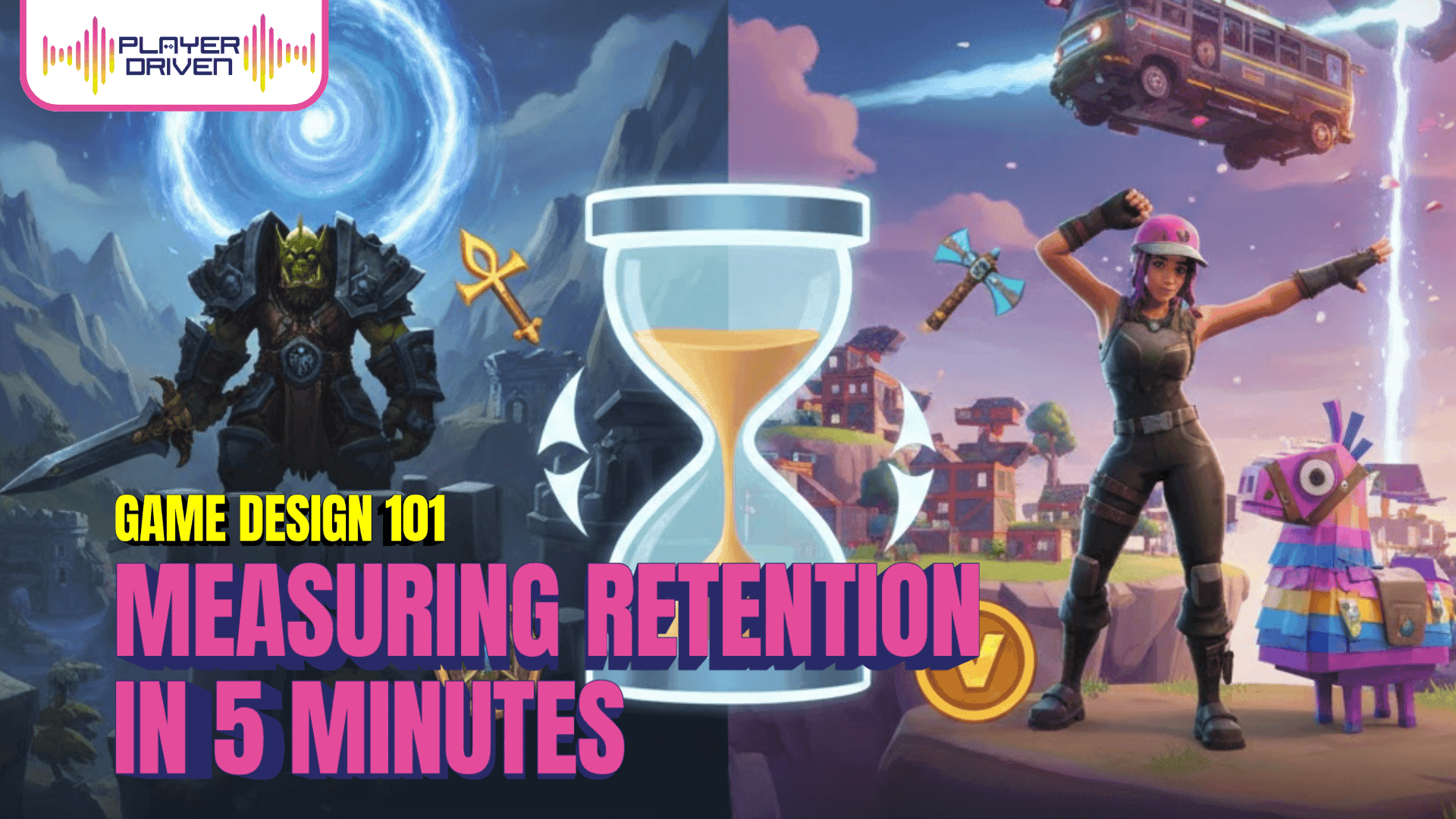
This short video is meant to be a quick, digestible introduction to the core KPIs used to measure player retention, including why Day 1, Day 7, and Day 30 retention exist in the first place and how they’re interpreted across different types of games.

Rather than focusing on tools or analytics platforms, this breakdown stays grounded in game design fundamentals. What do these metrics reveal about onboarding, early fun, and long-term engagement? Why does a healthy retention curve look different for a mobile game than it does for a PC or live service title?

This is the foundation. If you understand these retention signals, you can ask better questions, design better systems, and make more informed decisions around LiveOps, content cadence, and player experience.

This post and video are part of Game Retention 101, a short-form series focused on making core game analytics concepts more approachable for developers, designers, community teams, and anyone trying to understand why players stick around.

More breakdowns coming.

Topics covered

  • Player retention fundamentals

  • Day 1, Day 7, and Day 30 retention

  • Essential game analytics KPIs

  • Retention vs engagement

  • Designing for long-term player experience

What KPIs Actually Matter When Measuring Player Retention

Player retention is one of the most talked-about metrics in games, and also one of the most misunderstood.

Teams track dashboards full of numbers, but too often lose sight of what those metrics are actually telling them about player behavior. Retention isn’t just a percentage. It’s a signal. A way to understand whether players are finding value, forming habits, and choosing to come back.

This short video is meant to be a quick, digestible introduction to the core KPIs used to measure player retention, including why Day 1, Day 7, and Day 30 retention exist in the first place and how they’re interpreted across different types of games.

Rather than focusing on tools or analytics platforms, this breakdown stays grounded in game design fundamentals. What do these metrics reveal about onboarding, early fun, and long-term engagement? Why does a healthy retention curve look different for a mobile game than it does for a PC or live service title?

This is the foundation. If you understand these retention signals, you can ask better questions, design better systems, and make more informed decisions around LiveOps, content cadence, and player experience.

This post and video are part of Game Retention 101, a short-form series focused on making core game analytics concepts more approachable for developers, designers, community teams, and anyone trying to understand why players stick around.

More breakdowns coming.

Topics covered

  • Player retention fundamentals

  • Day 1, Day 7, and Day 30 retention

  • Essential game analytics KPIs

  • Retention vs engagement

  • Designing for long-term player experience

What KPIs Actually Matter When Measuring Player Retention

Player retention is one of the most talked-about metrics in games, and also one of the most misunderstood.

Teams track dashboards full of numbers, but too often lose sight of what those metrics are actually telling them about player behavior. Retention isn’t just a percentage. It’s a signal. A way to understand whether players are finding value, forming habits, and choosing to come back.

This short video is meant to be a quick, digestible introduction to the core KPIs used to measure player retention, including why Day 1, Day 7, and Day 30 retention exist in the first place and how they’re interpreted across different types of games.

Rather than focusing on tools or analytics platforms, this breakdown stays grounded in game design fundamentals. What do these metrics reveal about onboarding, early fun, and long-term engagement? Why does a healthy retention curve look different for a mobile game than it does for a PC or live service title?

This is the foundation. If you understand these retention signals, you can ask better questions, design better systems, and make more informed decisions around LiveOps, content cadence, and player experience.

This post and video are part of Game Retention 101, a short-form series focused on making core game analytics concepts more approachable for developers, designers, community teams, and anyone trying to understand why players stick around.

More breakdowns coming.

Topics covered

  • Player retention fundamentals

  • Day 1, Day 7, and Day 30 retention

  • Essential game analytics KPIs

  • Retention vs engagement

  • Designing for long-term player experience

Share

LinkedIn

Facebook

Copy link

Share

LinkedIn

Facebook

Copy link

Share

LinkedIn

Facebook

Copy link