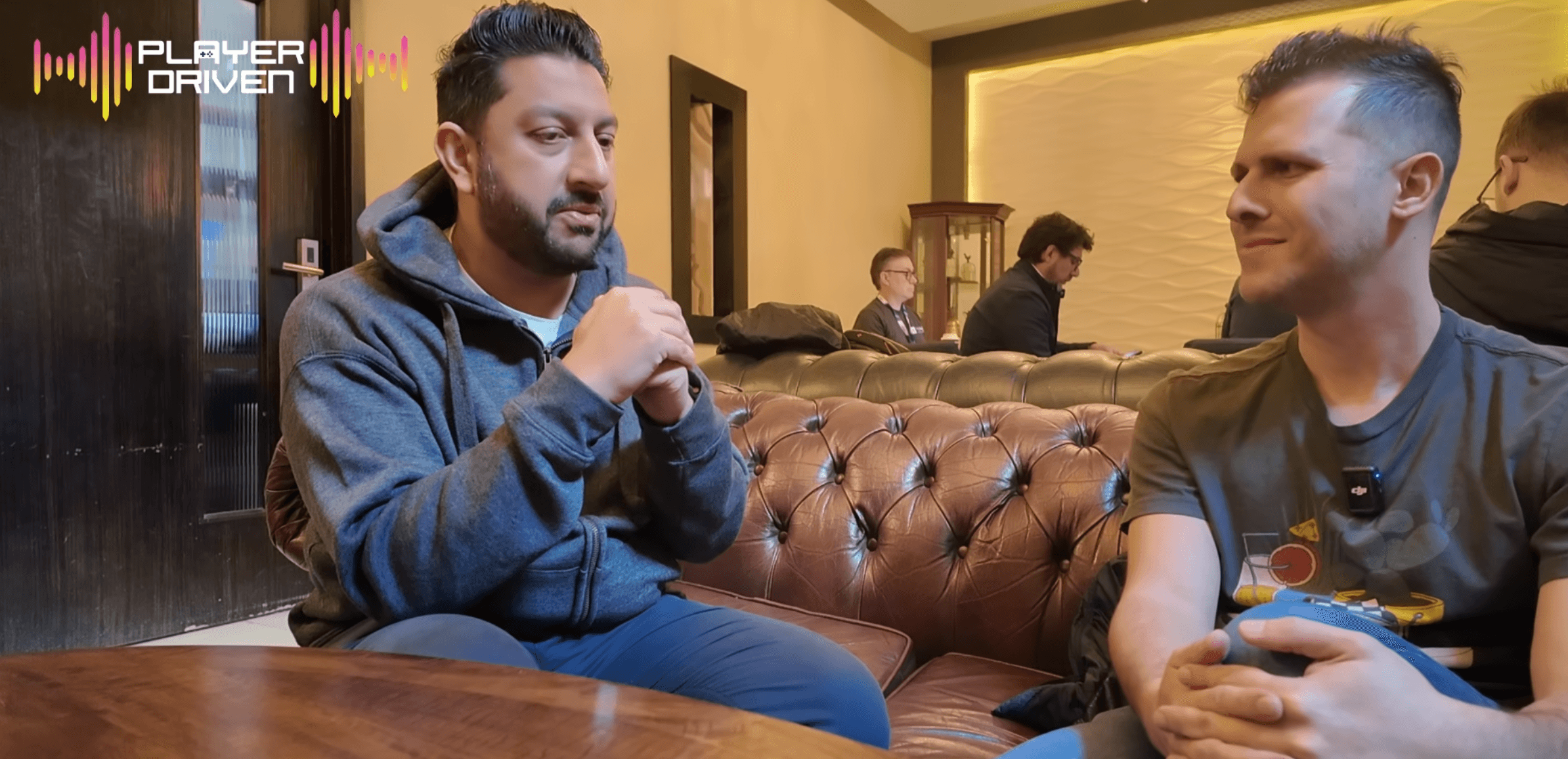
Forces in the EU are working to tap into video games’ latent potential to make the real-world a better place for everyone and the environment
Fighting for a better future is hard, and it's dangerous, and it's hilarious and it's…you know, you might end up in jail.—Dr. Joost Vervoort
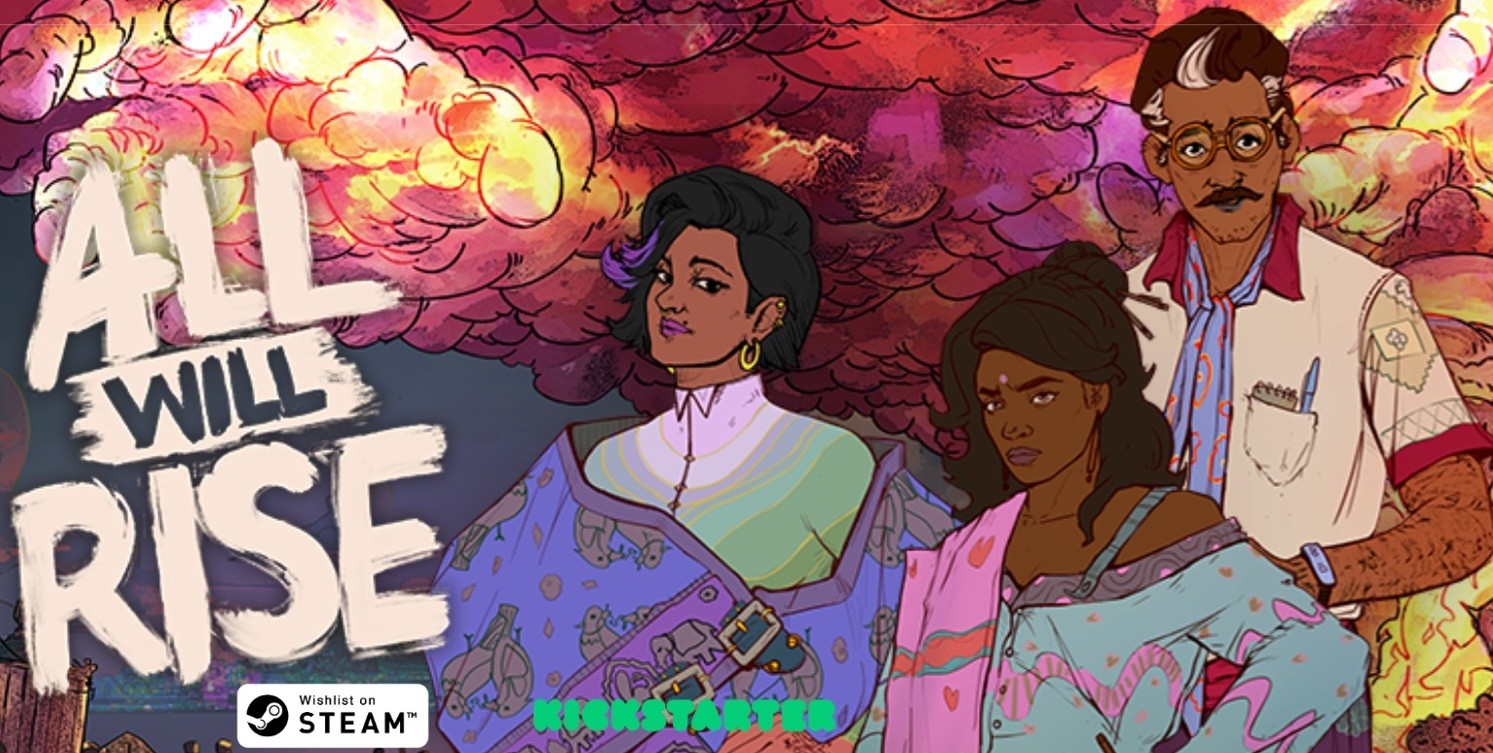
Picking up where we left off last week, we’ll conclude our profile of Associate Professor Joost Vervoort here by examining (1) the relationship between has day job and Horizon Europe’s massive €93.5 billion resource pool and (2) how All Will Rise—a forthcoming pro-environment deck-building game with which Vervoort is deeply involved—is designed to encourage players to get off the couch and engage in progressive irl political actions.
Let’s get to it, and don’t forget to subscribe to our newsletter and share it if you dig it!
Political Games Shouldn’t Tell Players to Be a ‘Good Little Human’
If you look at [TV] series or films or something like that, there's lots of stuff that's about political tensions and all kinds of corruption. That can be just as interesting in a game.—Dr. Joost Vervoort
At a few points in our podcast discussion with Vervoort back in February, I and Player Driven’s founder, Greg Posner, caught references to something called Strategies. We eventually asked him about it.
“Strategies is a project that's funded by the EU,” Vervoort explained. “It's a multi-year project funded by their Horizon program.”
I had to go look it up.
Horizon Europe is indeed a research and innovation program funded by the EU. It kicked off 2021 and it runs through 2027; a 2028+ refresh is in the works. The program has many parts, but improving human and environmental health is a key piece of it, and an overarching aim is to boost European competitiveness and growth. Total funding in the 2021-27 window should clock in at roughly €93.5 billion.
“It involves a bunch of universities throughout Europe,” continued Vervoort, “and a bunch of studios. For instance, there's an incubator from Cologne, you know, where Gamescom is. SpielFabrique is involved.”
SpielFabrique is a Franco-German accelerator program that supports indie video game studios through mentoring, consulting, networking, and financing.
“The Sustainable Games Alliance, who look at how the game industry itself [can] be more sustainable in terms of its footprint and emissions, is involved as a partner in Strategies as well,” Vervoort added. “There's multiple parts to it, but two parts, to keep it simple, is that one of them is about, ‘How can we make the game industry more sustainable?’”
“The other one is, 'How can how can we work with games as a cultural phenomenon, that influences the culture, and how people talk about societal issues?'” through the medium of video games. “That's the thing that I'm more interested in.”
Gotcha.
Speculative Agency’s All Will Rise can be understood as a test balloon that’s headed in the latter direction. We’ll circle back to that project again shortly.
For the record, the Sustainable Games Alliance, a non-profit based in Helsinki, Finland, is endeavoring to make the games industry a leader in environmental sustainability and social responsibility.
“In the games industry, there's lots of lots of people who are interested in working with…themes about a better future and, sort of, sustainability, and so on, but who don't have a background in it,” Vervoort explained. It was clear to Posner and me that Vervoort considers educating people about how these dots can be connected to be a vital aspect of his day job at Utrecht University in the Netherlands, and beyond.
When I'm teaching game design students, I think the challenge is really, “How do you help people think strategically about what these games should be about?”
“You can tell them [students], 'Oh, this is climate change, this is blah, blah, blah.' But it doesn't say anything about how you can make a good game about that,” said Vervoort. “I'm interested more in talking about, 'Hey, you know politics can be an interesting topic, right?'”
“When people think about, 'Oh, games and climate change, or games and sustainability,’ it has a boring connotation of wanting to make something that's very nice, and that's very polite, and that just tells you to be a ‘good little human.’”
“This is really a little bit out of step with what is happening in the real world,” Vervoort told us in a sober tone. “It's a very different thing. Great games can be made about that.”
Progressives: Go Forth and Agitate for Positive IRL Change…Preferably, After Playing All Will Rise
I feel like giving people some more appetite for chaos. We don't want to pretend that doing politics, and trying to fight, sort of, much more powerful people, is easy. It's messy, it's hard, it's difficult. It can be boring sometimes. We want all these things to be part of the game. But if I talk to real activists, and real, sort of, people involved in these cases, it’s very meaningful work.—Dr. Joost Vervoort
Given Vervoort’s profession and life experiences, a question Posner and I put to him late in our discussion involved his vision for how video games can help drive millions of players to take pro-environment and pro-social irl action.
“I think it is hard to do, for sure,” Vervoort began cautiously. “The way I think about games and change, is [that] I think about games as part of culture. So, they are a site where culture is being reproduced, and being expressed, and being created.”
“Games normalize certain cultural ideas, right? If they're in all the games, it just becomes this sense of a cultural norm.”
“I'm less interested in games telling people, giving people information,” he continued. “I don't think that works at all, right?”
The way that people change through games is by...changing their relationships with themselves.
“I have been fundamentally changed,” reflected Vervoort, “fueled by [Hollow Knight:] Silksong, because Silksong demands such precision and such moment-to-moment attention to detail, and to movement, and reactivity, that I noticed myself going to my kickboxing class and sparring with people and having a ‘Silksong brain.’ [I'm] suddenly seeing more windows of attack, stuff like that.”
Images of Neo downloading Kung-Fu and dodging bullets in The Matrix flashed through my mind.
“I did the research with a master’s student about Dark Souls and Disco Elysium,” Vervoort added, referring to two reasonably recent video games that he likened to All Will Rise in last week’s post. “Just asking people to talk freely about what they feel has changed in their lives because of these games.”
“Often these types of stories, and also with other games, are a lot more about how people see themselves, and how they see their general relationship with reality, how they think about their own capacities.”
“Something like Dark Souls, for instance, gives people a general trust, not always, of course, but often, in their ability to do things that they've never done before.”
What they learn from such experiences “is called self-efficacy, perceived self-efficacy.”
That one sent me back to the web.
The theory of self-efficacy was first described by the Canadian-American psychologist and social sciences professor Albert Bandura in 1977. Unlike self-esteem, self-efficacy is task-oriented and involves an individual's belief in their capacity to behave in ways that help them reach specific goals. Wikipedia has a deep dive on the theory and outlines some of the evidence that backs up the theory.
It largely boils down to helping people answer the question, “Can I do this?” Vervoort said. “Quite a few people say, 'Yeah, because of Dark Souls, I'll often have to do something hard, and I think, ‘Well, I beat Dark Souls, I could probably do this.’”
Vervoort and the team at Speculative Agency hope that All Will Rise will “be, in in a way, the Dark Souls of politics, right? So, to be like, ‘Oh, I beat All Will Rise. Maybe I should actually get involved with this [political] stuff because I think I have a brain for thinking about how to organize, how to talk to people, how to frame issues.’”
If there’s a “message” in All Will Rise, from Vervoort’s perspective, it’s that its gameplay has the potential to unlock player’s perceived self-efficacy with respect to irl progressive politics and climate action. It’s a gateway drug to a better, brighter, liberal future!
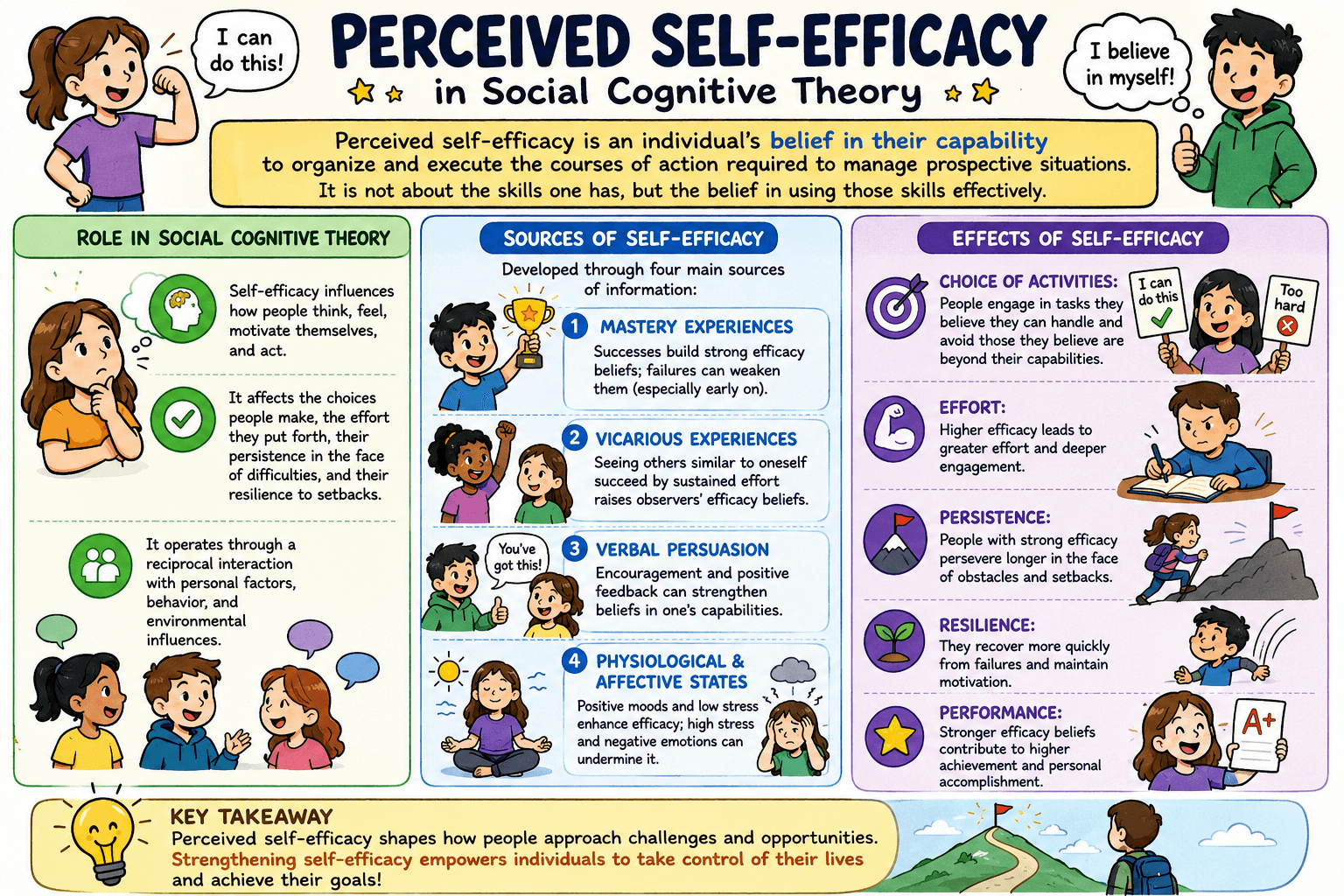
I can’t vouch for the accuracy of the self-efficacy overview above, but this is how ChatGPT’s image generator summed it up.
In the midst of our discussion, my meandering clarification question involved process. His vision, I restated, is that people will play All Will Rise and come away with the notion that getting involved in pro-environment actions and politics is “fun, in a way that actual in real life activity may not be fun, but at least they'll go into it with the idea that not only ‘Could I do it, but it might actually be fun,’” right?
“Exactly,” Vervoort responded. “I spoke with a lawyer in India...who said, ‘If you want to be a lawyer in India, you have to have a great appetite and enthusiasm for chaos because the system is really chaotic. You have to like this, otherwise you won't last.’”
Vervoort switch gears, recalling the time he was “involved with this one case for a while before it was, actually, an unexpected success.”
Readers of last week’s post will recall the ABP pension fund court case—in which Vervoort was a plaintiff—that, ironically, helped inspire All Will Rise’s original concept.
“The pension fund decided, even before the case was fully...It was announced, and so on, but it wasn't, like, initiated. They [ABP] decided to take 15 billion euros out of fossil fuels and put it in renewables. I was there in the meeting. You have to imagine this was during COVID, in the meeting online, when this was announced...there were like 60 people working on that case. And everyone was like, ‘What the hell? They just did it?’”
Vervoort grinned.
“They were thinking that they were going to be working on this for years, you know?”
That was such an incredible, like, dopamine sort of moment, cathartic moment.
“There you go,” I said. “You got your irl payoff. The emotional payoff happened in real life.”
“Exactly,” Vervoort said.
“I think that that's real, right? People working on stuff that really matters to them have an experience that...”
He trailed off, lost into thought.
“I think they once asked Gandhi, you know, ‘What is it like to be so altruistic?’”
“Maybe I'm completely misquoting him but he said something like, ‘No, no, no, I'm doing this for myself. This is really fun,’ you know? Like, I think there couldn't be anything more fun in the world that I could be doing than this.”
What an amazing window into Vervoort’s soul.
I went back to the web. I couldn’t find a Mahatma Gandhi vignette quite like what he described, but I found two close hits.
In 1928, Gandhi wrote in Young India, when a person surrenders to the service of others, “It becomes his delight and his recreation,” and that person is “never weary of spending himself in the service of God’s creation.”
In 1925, he also wrote in Young India, in the context of sacrifices being made by public workers, “No sacrifice is worth the name unless it is a joy. Sacrifice and a long face go ill together.”
Close enough for horseshoes.
“The pain of joy and the joy and the pain, all connected, and learning and stretching yourself, right?” Vervoort continued.
“I think a lot of people in AAA sort of like traditionally thought, ‘No, we have to, like, spoon feed the gamers. We have to take them by the hand and everything has to be easy.’ And then Elden Ring is a massive success. Baldur's Gate 3 is a massive success. Silksong is a massive success.”
“Team Cherry,” he continued, “who made Silksong, said, also about Hollow Knight, they said, ‘You know, if we make the game too easy, people won't be talking about it. We want to make the game so hard that people start talking to each other about how to do it.’”
“I don't think All Will Rise will be quite that difficult. Difficulty, in that sense, won't be our focus, but definitely the messy complexity of dealing with all this stuff.”
Vervoort added that he and Speculative Agency “want the game to be replayable enough so that you could talk to your friends and be like, ‘Did you find that card? Did you do that mission?’ ‘No, I wore out my team and they all had a burnout.”
In that case, “’Okay, well, I sort took care of my team and we went on this weekend trip’ and, you know, that those kinds of conversations, because it's a single-player game. A lot of wonderful single-player games have great communities around them.”
The social media communities, and the cultures around games is, I think, where a lot of the work happens.
Posner asked Vervoort if there was a specific studio that he thought was spearheading the kinds of gameplay experiences that were aligned with his vision, and that of the broader Strategies team.
He responded that, in terms of “work ethics and the way that they're doing things, I'm very appreciative of Supergiant Games with Hades.”
Also, “Gareth Damien Martin [the writer of] Citizen Sleeper one and two is definitely an example for us.”
“The first Citizen Sleeper was inspired by Anna Tsing's book, The Mushroom at the End of the World, which is a really cool anthropological study of people making a living, sort of, collecting Matsutake mushrooms on the edge of society.”
If you’re interested in learning more about Tsing's 2015 book, The Mushroom at the End of the World: On the Possibility of Life in Capitalist Ruins, there’s a summary here.
“You really see that, and especially in the first Citizen Sleeper,” Vervoort told us. “I think that's a really wonderful example of a deep and meaningful game that really tries to so say something about community and community resilience. And it's really interesting and narratively strong.”
“I've met Gareth Damien Martin and we've spoken about All Will Rise and they're very interested in it. So that's very nice, you know, to be able to make that connection.”
“If All Will Rise succeeds, then maybe other people can do this.”
Vervoort went back to the studio well one more time.
“I know what my example is actually: The new Wolfenstein series. Well, new-ish. Wolfenstein: The New Order and [Wolfenstein II:] The New Colossus.”
“Big games, right? AAA games made by MachineGames, or at least AA. And they are very explicit about anti-fascism.”
“Especially Wolfenstein II: The New Colossus is about fascism in America.”
“It speaks about a long history of structural racism,” Vervoort added. “It's amazing. You know, in one moment you're talking about that, and then the next moment you're on a Nazi UFO flying to Venus...to pretend to be an actor who wants to star in Hitler's new movie, that's actually about you.”
“To be able to walk that tightrope of, sort of, deep, serious, hilarious, and very serious things, I think, is amazing. So yeah, MachineGames might be the example.”
Games for Better Futures
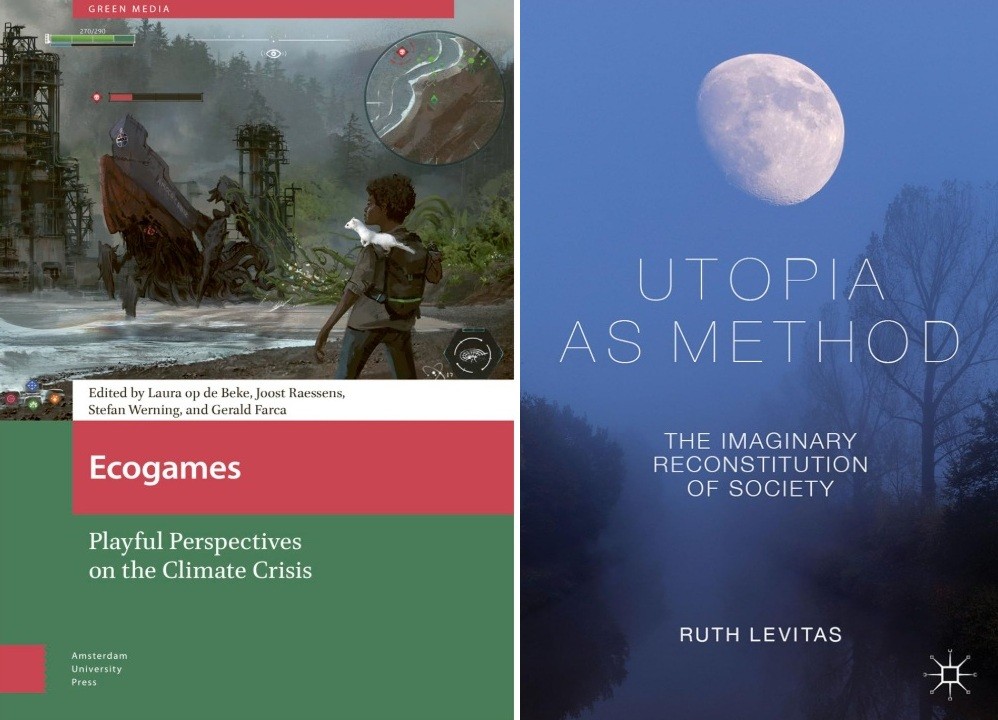
We wrapped up our podcast with Vervoort by asking him to comment on three excerpts from a book chapter he co-authored. Ecogames: Playful Perspectives on the Climate Crisis debuted in 2024, and Vervoort contributed to a very much on-brand chapter, entitled “Games for Better Futures.”
In there, he and his colleagues wrote, “Games that have been designed specifically for the purpose of encouraging behavioral change have yet to have an impact at scale…[The] opportunities to combine commercial success with effective engagement with the planetary crisis are only beginning to be explored.” I asked Vervoort to name a game that had done really well both fronts.
“There's great work being done by Playing for the Planet, who are doing this Green Game Jam,” Vervoort said after pondering the question a few seconds. This org is “putting these green activations in existing games. I think that's really cool.”
Some info about Playing for the Planet’s Green Game Jam is here; the 2026 challenge is for participating studios to build in-game activations around coral reef or rainforest environment, and then to donate associated proceeds to real-world ecosystem preservation/restoration causes.
“My favorite sort of version of this is the type of stuff that we're doing with All Will Rise,” though, Vervoort clarified. “We have to build a culture, right? We have to build a gaming culture that, just like the alt-right has done once upon a time, that is about identities and standards and norms and what people love.”
“People need more positive futures to even be able to imagine them,” he continued. “If you don't know what a better future could be like, then you can't imagine it. You have no reference point. …The focus with All Will Rise has been a lot on, ‘How do we make the struggle to get there interesting and make that sort of a dynamic, epic story that you can engage with?’ This idea of presenting worlds that people can imagine they want, we want to live in, I think, is very powerful.”
We don't just want to talk about the struggle. We also want to show, in our version of Kerala, South India, that there is a better world possible. Kerala, in our game, although there is a river on fire and so on, is a little bit utopian in the sense that the politics are very communitarian. There are all kinds of experiments going on, which does happen in the real Kerala, but here even more.
Speaking of utopic visions, this topic also came up in the aforementioned book chapter. Vervoort and his colleagues wrote, “We think that connecting games to the realm of civic action, political action, and activism is by far the most impactful: games that take the idea of utopian development further, and activate and motivate people to get out there, to organize, to get involved in politics; games that stir up the trouble needed for systemic change; and, specifically, games focused on tearing down existing structures and systems."
I asked Vervoort to connect the dots between video game design efforts and the “utopian development” noted in this chapter, and that could have an increasing irl impact.
“Utopia is not a state,” he began. “It's not, like, a special society to just exist somewhere out there.”
“It's a process, right? Processes can be utopian. The way that we organize politics can be utopian in themselves. The way that we organize resistance and societal movements and so on can be utopian. So, utopia as process, utopia as method, as the title of a famous book about utopias by Ruth Levitas goes...I'm very interested in representing [utopias] in games...because I also think that that's a way that people can...get the tools and the skills and the strategies that they need to actually do it” irl.
It was back to the web for me. Ruth Levitas is a prominent UK-based sociologist, professor, and author who wrote (among other works) Utopia as Method: The Imaginary Reconstitution of Society. A look at this influential 2013 book is available here.
“I think that's an important thing that's kind of missing,” Vervoort continued. “A lot of games communicate something about how it's important to care for the future and so on, and what could go wrong, but they don't really give people the skills they need to actually do it, to go out and do it.”
“I think games,” he added, “can't do that by themselves. I think we need a culture in which those games can land.”
Part of building that culture rests on treating video games like the influential works of art they can be, and millions of more people attaining what he called “gaming literacy.”
“I'm 43, and I grew up in a time where games were...There weren't, like, just one game dominating everything.”
“I speak to a lot of younger people,” Vervoort said, and they “don't know most games, like, games like Elden Ring and Baldur's Gate 3, that I know.”
“For many people, they just play Fortnite or they just play FIFA or something.”
“I was talking to a bunch of high school students the other day, when I was coming around with All Will Rise and I [asked] them, ‘Do you get any classes about games?’ Nothing. And I was like, 'Why do you think that is?' And they're like, ‘Well, games are not, you know, people think games are escapism and so on.’ And I was like, ‘Yeah, and is that fair?’ And they were like, ‘No, I don't think that's fair.’”
I think we need also a culture that is able to learn something from games.
“If I read a classic [book], if I read War and Peace or something, the mindset that I take to go into War and Peace is like, ‘This is one of the great books of the canon. This is something that says something about the human experience.’ And it’s my favorite book.”
“When I played Planescape: Torment,” Vervoort continued, “I was like, ‘I’m going to play this like it's a holy text.’ Because it, kind of, is, you know. It's such a classic game.”
“If you play like that, you get a very different experience from just thinking...‘I’m just escaping reality.’”
“Important meaning-making can happen around games. And the thing is, it does, right? If you if you look at Gamergate and the alt-right, and stuff like that, part of the reason why people make such strong identities around games is because they're, in a way, rebelling against mainstream culture, or their perceptions of mainstream culture, that tells them that games are shit and culturally worthless.”
“Then it becomes kind of a mark of honor to be like, ‘We’re gamers,’ you know, and that creates identities and stuff.”
About a decade ago, Gamergate became international news when the online (and irl doxing) harassment campaign, which was motivated by an alt-right backlash against feminism, diversity, and progressivism in video game culture, boiled over into pop culture and ran into counterforces like Black Lives Matter and Me Too.
I went back to the Ecogames well one last time. Vervoort and company wrote therein that, “This need for radical change is further exacerbated by inequalities, power imbalances, and injustices that only become more pressing as time goes on.” I asked how rising inequalities and power imbalances make it harder to create the better future he envisions, and he didn’t pull his punches.
“I think the radical form of capitalism that we currently inhabit only serves the very richest people, you know. We might pretend, we might fool ourselves that it's benefiting everyone...I'm not talking about free markets, right? Free markets, you know, whatever, fine, you know, that can work.”
But capitalism as an ideology, the idea that profit and capital rules everything and, taken to the extreme that it's now being taken, right, in a way, that influences politics, where politics becomes entirely undemocratic because of the influence of money and technology. That's destabilizing. The people who are in the positions to use that power to get, to gain more money…are often in those positions because they miss some sort of ethical compass.
“They are also molded by their environments into thinking that they're better than others,” Vervoort concluded. “A lot of research that shows that if you have a huge amount of money and power, you gradually just start to think that you're just different from other people, you know?”
“You just start to develop a psychology of exceptionalism. And, I think, an unreality. In a way, I pity billionaires because they are living in a really surreal world.”
“And it's a hallucination.”
“People who are hallucinating all these strange things, who have so much power to wield, they are not in touch with what it means to be a person.”
I don't want to put too much agency with these people because capitalist systems are also...they're just, like, a force by itself that no one really controls that, in some ways, is very destructive. It's like a disease. It's a disease that some people are very ill with, and a lot of other people, you know, bear the brunt of. I think more equality, more freedom, more autonomy, you know, benefits all of us, and would probably also lead to better environmental outcomes.
“I think that there is a very concerning worship of psychopathic tendencies in society that seems cool, but are not great for any of us,” Vervoort told us at the end of our remarkable conversation. “That's a cultural and a moral problem that we need to face.”
And Vervoort’s and Speculative Agency’s All Will Rise will be a step in the right…well, left…direction when it debuts late this year.