Microsoft’s Gaming Problem, And The Downsides Of AI

Microsoft’s Gaming Problem, And The Downsides Of AI

Blogs

February 6, 2026

Colan Neese

Microsoft’s Gaming Problem, And The Downsides Of AI

Blogs

February 6, 2026

The Xbox Miss and the Genie 3 Mirage: Is AI Squeezing the Life Out of Gaming?

If you’re a "Patch Notes" person or prefer Substack, I’ve got you covered here.

Before we dive in: I’ll be at D.I.C.E. Summit in Las Vegas (Feb 10–12) and GDC in San Francisco (March 9–13). My calendar is filling up, but if you want to talk attention economics or grab a coffee, here is my Calendly.

Now, let's talk about why the "AI is the future of games" discourse is missing the point—and why Microsoft’s recent earnings report tells a much scarier story than a simple quarterly miss.

The Genie 3 Hype: Tech Demos vs. Actual Games

When Google unveiled Genie 3, the "this changes everything" takes were instantaneous. Stock prices for Take-Two and Unity dipped as investors panicked that "generative worlds" would replace game developers.

As mindGAME Data founder Brian Rogers noted, this reaction reveals a fundamental misunderstanding of our industry. Games are not just 60-second "vibes" or video loops; they are complex systems of balance, progression, community, and trust.

Players have a "bullshit detector" for sterile, AI-generated content. A game isn't just a map; it’s the shared meta, the Discord servers, and the decades-long clan friendships. AI is a better hammer—a tool for productivity—not a replacement for the "rider" (the creator).

Microsoft’s Q4 Miss: The "Compute" Gravity Well

The real story this week wasn't just Google’s AI demo; it was Microsoft’s Q4 earnings. Xbox revenue declined 9%, and hardware plummeted 32%. While some see this as a "box" failure, it actually signals a shift in corporate incentives.

Microsoft is no longer just a software company; it is a capital allocation machine obsessed with one thing: Compute.

The Portfolio Breakdown: The "Berkshire Hathaway" of Gaming

Microsoft Gaming is structured more like a holding company than a single publisher:

  1. Xbox Game Studios: The first-party label (Halo, Forza).

  2. ZeniMax Media: The Bethesda side (Starfield, Fallout).

  3. Activision Blizzard King (ABK): The blockbuster engine (Call of Duty, Candy Crush).

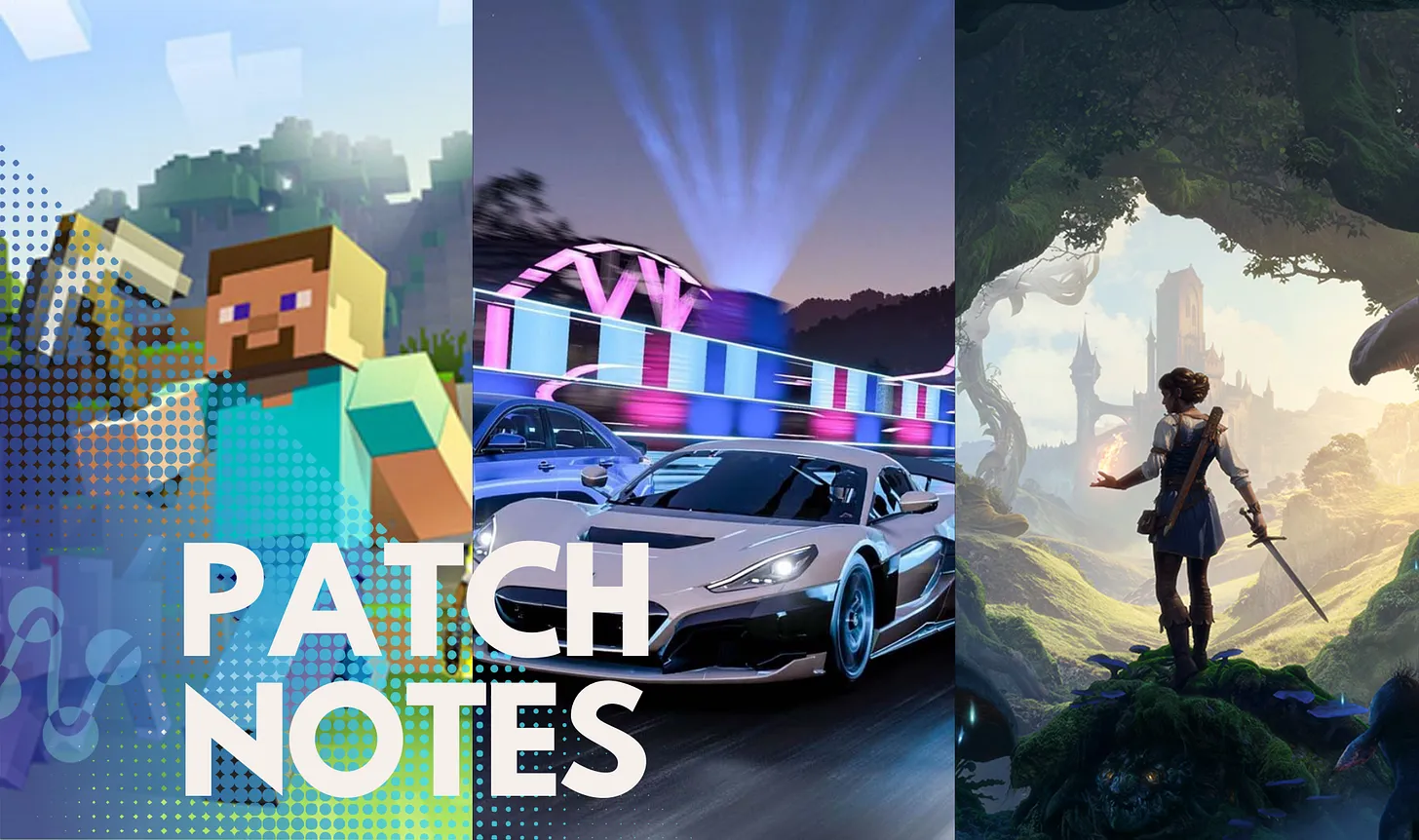
According to mindGAME Data, Minecraft is the sun this solar system orbits. It accounts for roughly 7% of the entire market's attention. Without it, the internal Xbox slate looks structurally thin.

Why the "Miss" Happened: Signal Divergence

The Q4 miss shouldn't have been a surprise. The data signals were screaming for months:

  • Call of Duty: Black Ops 7: Peak mindSHARE was 1.07%, a massive 71% decline compared to Black Ops 6.

  • Ninja Gaiden 4: Failed to crack the top 25 in channel ranks; Steam CCU peaked at a meager 11,000.

  • The Outer Worlds 2: Failed to track anywhere near the original’s engagement levels.

When your biggest franchises underperform, a "soft" quarter turns into a "miss" instantly. This puts immense pressure on upcoming 2026 titles like Forza Horizon 6 and Fable to prove that Xbox can still ship cultural events, not just content.

The Industry-Wide Risk: The Subsidy Layer

We often ignore how much Microsoft subsidizes the entire industry. Between 2023 and 2024, Microsoft spent over $1 billion annually to bring third-party titles to Game Pass.

This isn't just for indies. Giants like Riot Games, EA, and Epic Games (Fortnite Crew) have integrated their services into the Game Pass Ultimate bundle. It has become a distribution backstop for the entire sector.

Subscription Partner

Integration Type

Riot Games

All Champions Unlocked (LoL, Valorant)

EA Play

Full Catalog included in Ultimate

Ubisoft+

Classics library included in Ultimate

Epic Games

Fortnite Crew monthly perk

The Ugly Truth: Opportunity Cost in the AI Era

The biggest threat to Xbox isn't Sony; it's Azure and OpenAI.

Microsoft’s capital expenditure (CapEx) hit $37.5B last quarter, up 66%. They are in a high-stakes arms race for GPUs and silicon. In this environment, every dollar spent on a game studio is a dollar not spent on the AI infrastructure that Wall Street actually rewards.

The TSMC Bottleneck

The world’s advanced chips are funneled through TSMC. As long as silicon is scarce, the price of compute stays high. If Microsoft has to choose between funding a risky $200M RPG or buying more H100s to satisfy a $625B commercial backlog, the RPG will lose every time.

Conclusion: The Separation of Church and State?

We are entering an era where Gaming—a $23B business—is a rounding error inside a $3T AI powerhouse. This creates a "squeeze" on developers to ship faster, reuse assets (as seen in recent Obsidian reports), and chase 30% profit margins that are historically rare in game dev.

The fear isn't that AI will write the next Halo. The fear is that the economics of the AI arms race will force a triage of the Xbox portfolio, potentially leading to a spin-off or a radical restructuring.
The Xbox Miss and the Genie 3 Mirage: Is AI Squeezing the Life Out of Gaming?

If you’re a "Patch Notes" person or prefer Substack, I’ve got you covered here.

Before we dive in: I’ll be at D.I.C.E. Summit in Las Vegas (Feb 10–12) and GDC in San Francisco (March 9–13). My calendar is filling up, but if you want to talk attention economics or grab a coffee, here is my Calendly.

Now, let's talk about why the "AI is the future of games" discourse is missing the point—and why Microsoft’s recent earnings report tells a much scarier story than a simple quarterly miss.

The Genie 3 Hype: Tech Demos vs. Actual Games

When Google unveiled Genie 3, the "this changes everything" takes were instantaneous. Stock prices for Take-Two and Unity dipped as investors panicked that "generative worlds" would replace game developers.

As mindGAME Data founder Brian Rogers noted, this reaction reveals a fundamental misunderstanding of our industry. Games are not just 60-second "vibes" or video loops; they are complex systems of balance, progression, community, and trust.

Players have a "bullshit detector" for sterile, AI-generated content. A game isn't just a map; it’s the shared meta, the Discord servers, and the decades-long clan friendships. AI is a better hammer—a tool for productivity—not a replacement for the "rider" (the creator).

Microsoft’s Q4 Miss: The "Compute" Gravity Well

The real story this week wasn't just Google’s AI demo; it was Microsoft’s Q4 earnings. Xbox revenue declined 9%, and hardware plummeted 32%. While some see this as a "box" failure, it actually signals a shift in corporate incentives.

Microsoft is no longer just a software company; it is a capital allocation machine obsessed with one thing: Compute.

The Portfolio Breakdown: The "Berkshire Hathaway" of Gaming

Microsoft Gaming is structured more like a holding company than a single publisher:

  1. Xbox Game Studios: The first-party label (Halo, Forza).

  2. ZeniMax Media: The Bethesda side (Starfield, Fallout).

  3. Activision Blizzard King (ABK): The blockbuster engine (Call of Duty, Candy Crush).

According to mindGAME Data, Minecraft is the sun this solar system orbits. It accounts for roughly 7% of the entire market's attention. Without it, the internal Xbox slate looks structurally thin.

Why the "Miss" Happened: Signal Divergence

The Q4 miss shouldn't have been a surprise. The data signals were screaming for months:

  • Call of Duty: Black Ops 7: Peak mindSHARE was 1.07%, a massive 71% decline compared to Black Ops 6.

  • Ninja Gaiden 4: Failed to crack the top 25 in channel ranks; Steam CCU peaked at a meager 11,000.

  • The Outer Worlds 2: Failed to track anywhere near the original’s engagement levels.

When your biggest franchises underperform, a "soft" quarter turns into a "miss" instantly. This puts immense pressure on upcoming 2026 titles like Forza Horizon 6 and Fable to prove that Xbox can still ship cultural events, not just content.

The Industry-Wide Risk: The Subsidy Layer

We often ignore how much Microsoft subsidizes the entire industry. Between 2023 and 2024, Microsoft spent over $1 billion annually to bring third-party titles to Game Pass.

This isn't just for indies. Giants like Riot Games, EA, and Epic Games (Fortnite Crew) have integrated their services into the Game Pass Ultimate bundle. It has become a distribution backstop for the entire sector.

Subscription Partner

Integration Type

Riot Games

All Champions Unlocked (LoL, Valorant)

EA Play

Full Catalog included in Ultimate

Ubisoft+

Classics library included in Ultimate

Epic Games

Fortnite Crew monthly perk

The Ugly Truth: Opportunity Cost in the AI Era

The biggest threat to Xbox isn't Sony; it's Azure and OpenAI.

Microsoft’s capital expenditure (CapEx) hit $37.5B last quarter, up 66%. They are in a high-stakes arms race for GPUs and silicon. In this environment, every dollar spent on a game studio is a dollar not spent on the AI infrastructure that Wall Street actually rewards.

The TSMC Bottleneck

The world’s advanced chips are funneled through TSMC. As long as silicon is scarce, the price of compute stays high. If Microsoft has to choose between funding a risky $200M RPG or buying more H100s to satisfy a $625B commercial backlog, the RPG will lose every time.

Conclusion: The Separation of Church and State?

We are entering an era where Gaming—a $23B business—is a rounding error inside a $3T AI powerhouse. This creates a "squeeze" on developers to ship faster, reuse assets (as seen in recent Obsidian reports), and chase 30% profit margins that are historically rare in game dev.

The fear isn't that AI will write the next Halo. The fear is that the economics of the AI arms race will force a triage of the Xbox portfolio, potentially leading to a spin-off or a radical restructuring.
The Xbox Miss and the Genie 3 Mirage: Is AI Squeezing the Life Out of Gaming?

If you’re a "Patch Notes" person or prefer Substack, I’ve got you covered here.

Before we dive in: I’ll be at D.I.C.E. Summit in Las Vegas (Feb 10–12) and GDC in San Francisco (March 9–13). My calendar is filling up, but if you want to talk attention economics or grab a coffee, here is my Calendly.

Now, let's talk about why the "AI is the future of games" discourse is missing the point—and why Microsoft’s recent earnings report tells a much scarier story than a simple quarterly miss.

The Genie 3 Hype: Tech Demos vs. Actual Games

When Google unveiled Genie 3, the "this changes everything" takes were instantaneous. Stock prices for Take-Two and Unity dipped as investors panicked that "generative worlds" would replace game developers.

As mindGAME Data founder Brian Rogers noted, this reaction reveals a fundamental misunderstanding of our industry. Games are not just 60-second "vibes" or video loops; they are complex systems of balance, progression, community, and trust.

Players have a "bullshit detector" for sterile, AI-generated content. A game isn't just a map; it’s the shared meta, the Discord servers, and the decades-long clan friendships. AI is a better hammer—a tool for productivity—not a replacement for the "rider" (the creator).

Microsoft’s Q4 Miss: The "Compute" Gravity Well

The real story this week wasn't just Google’s AI demo; it was Microsoft’s Q4 earnings. Xbox revenue declined 9%, and hardware plummeted 32%. While some see this as a "box" failure, it actually signals a shift in corporate incentives.

Microsoft is no longer just a software company; it is a capital allocation machine obsessed with one thing: Compute.

The Portfolio Breakdown: The "Berkshire Hathaway" of Gaming

Microsoft Gaming is structured more like a holding company than a single publisher:

  1. Xbox Game Studios: The first-party label (Halo, Forza).

  2. ZeniMax Media: The Bethesda side (Starfield, Fallout).

  3. Activision Blizzard King (ABK): The blockbuster engine (Call of Duty, Candy Crush).

According to mindGAME Data, Minecraft is the sun this solar system orbits. It accounts for roughly 7% of the entire market's attention. Without it, the internal Xbox slate looks structurally thin.

Why the "Miss" Happened: Signal Divergence

The Q4 miss shouldn't have been a surprise. The data signals were screaming for months:

  • Call of Duty: Black Ops 7: Peak mindSHARE was 1.07%, a massive 71% decline compared to Black Ops 6.

  • Ninja Gaiden 4: Failed to crack the top 25 in channel ranks; Steam CCU peaked at a meager 11,000.

  • The Outer Worlds 2: Failed to track anywhere near the original’s engagement levels.

When your biggest franchises underperform, a "soft" quarter turns into a "miss" instantly. This puts immense pressure on upcoming 2026 titles like Forza Horizon 6 and Fable to prove that Xbox can still ship cultural events, not just content.

The Industry-Wide Risk: The Subsidy Layer

We often ignore how much Microsoft subsidizes the entire industry. Between 2023 and 2024, Microsoft spent over $1 billion annually to bring third-party titles to Game Pass.

This isn't just for indies. Giants like Riot Games, EA, and Epic Games (Fortnite Crew) have integrated their services into the Game Pass Ultimate bundle. It has become a distribution backstop for the entire sector.

Subscription Partner

Integration Type

Riot Games

All Champions Unlocked (LoL, Valorant)

EA Play

Full Catalog included in Ultimate

Ubisoft+

Classics library included in Ultimate

Epic Games

Fortnite Crew monthly perk

The Ugly Truth: Opportunity Cost in the AI Era

The biggest threat to Xbox isn't Sony; it's Azure and OpenAI.

Microsoft’s capital expenditure (CapEx) hit $37.5B last quarter, up 66%. They are in a high-stakes arms race for GPUs and silicon. In this environment, every dollar spent on a game studio is a dollar not spent on the AI infrastructure that Wall Street actually rewards.

The TSMC Bottleneck

The world’s advanced chips are funneled through TSMC. As long as silicon is scarce, the price of compute stays high. If Microsoft has to choose between funding a risky $200M RPG or buying more H100s to satisfy a $625B commercial backlog, the RPG will lose every time.

Conclusion: The Separation of Church and State?

We are entering an era where Gaming—a $23B business—is a rounding error inside a $3T AI powerhouse. This creates a "squeeze" on developers to ship faster, reuse assets (as seen in recent Obsidian reports), and chase 30% profit margins that are historically rare in game dev.

The fear isn't that AI will write the next Halo. The fear is that the economics of the AI arms race will force a triage of the Xbox portfolio, potentially leading to a spin-off or a radical restructuring.
Share

LinkedIn

Facebook

Copy link

Share

LinkedIn

Facebook

Copy link

Share

LinkedIn

Facebook

Copy link